History / The turntable

The turntable and the DJ

How did a playback machine become an instrument?

43 dated moments 17 disputed firsts Checked September 2026

How this chapter works. Every date comes from a source you can open, listed under each moment. Where the sources disagree about who was first, we say so rather than pick a winner. Editorial notes from the editor, a DJ of thirty years, are marked as the editor's. See this chapter on the timeline →

Acoustic to electric 1877 to 1948

1927 July 7

Christopher Stone presents the first BBC gramophone-record programme
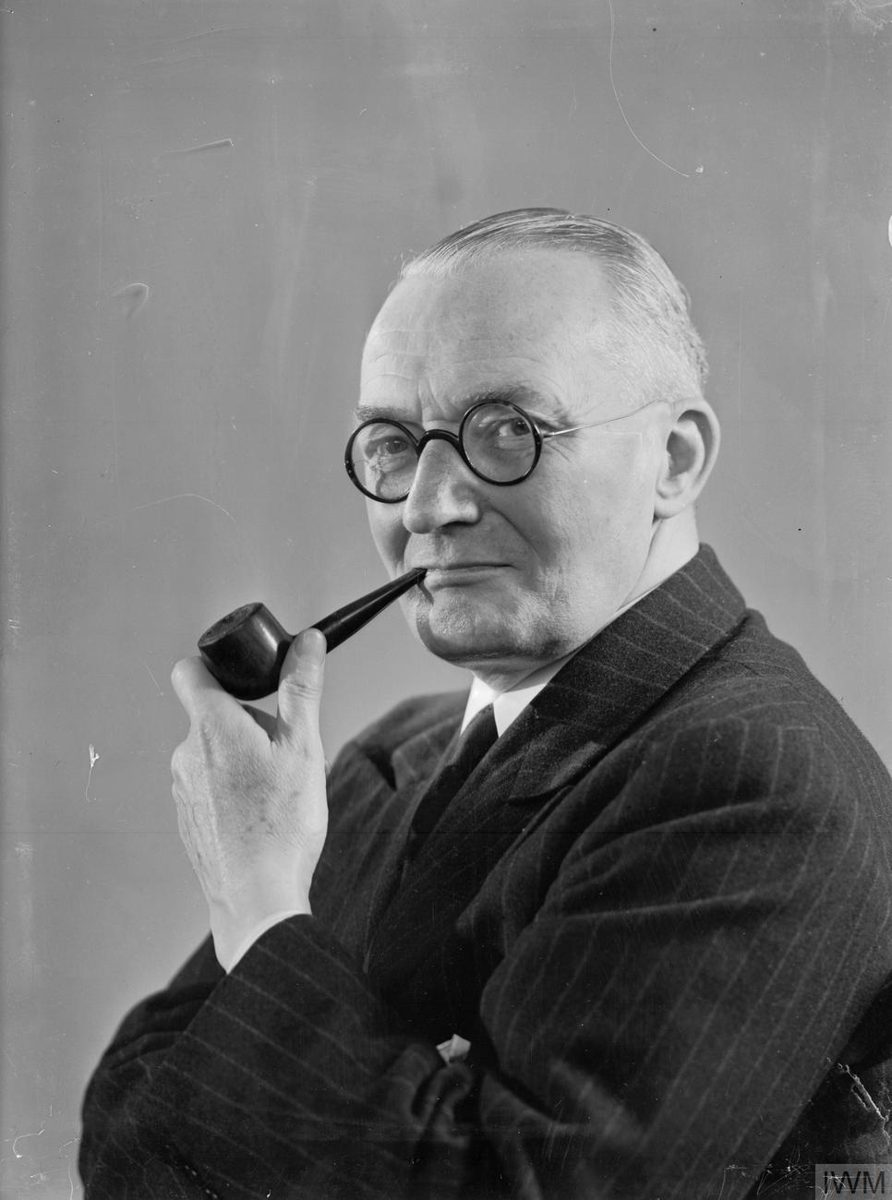
Christopher Stone · London, UK

Christopher Stone, the BBC's first gramophone-record broadcaster, portrait from 1945
Photo: Ministry of Information, via Imperial War Museums / Wikimedia Commons (PD-UKGov, Crown Copyright expired) · Public domain

Stone, a co-founder of The Gramophone magazine, talked the BBC into a program of jazz and dance records with his own ad-libbed introductions, becoming British radio's first named record-spinning announcer.

Why it matters Sets the template (a named personality talking over recorded discs on air) that American radio would later brand with the word 'disc jockey.'

Sources disagree Widely dated to 7 July 1927 by dedicated radio-history sites, but one 2022 audio-trade retrospective (Sonicstate) gives 1924 for his first broadcast and 1932 for a regular slot; the 1927 date has the stronger, more specific sourcing.

  • OldRadio.org 2026-09 Dedicated radio-history blog entry dated to the anniversary; read September 2026.
  • Sonicstate 2022-09 Audio-industry trade site; gives conflicting 1924/1932 dates, noted in dispute field.
On the timeline →
1935

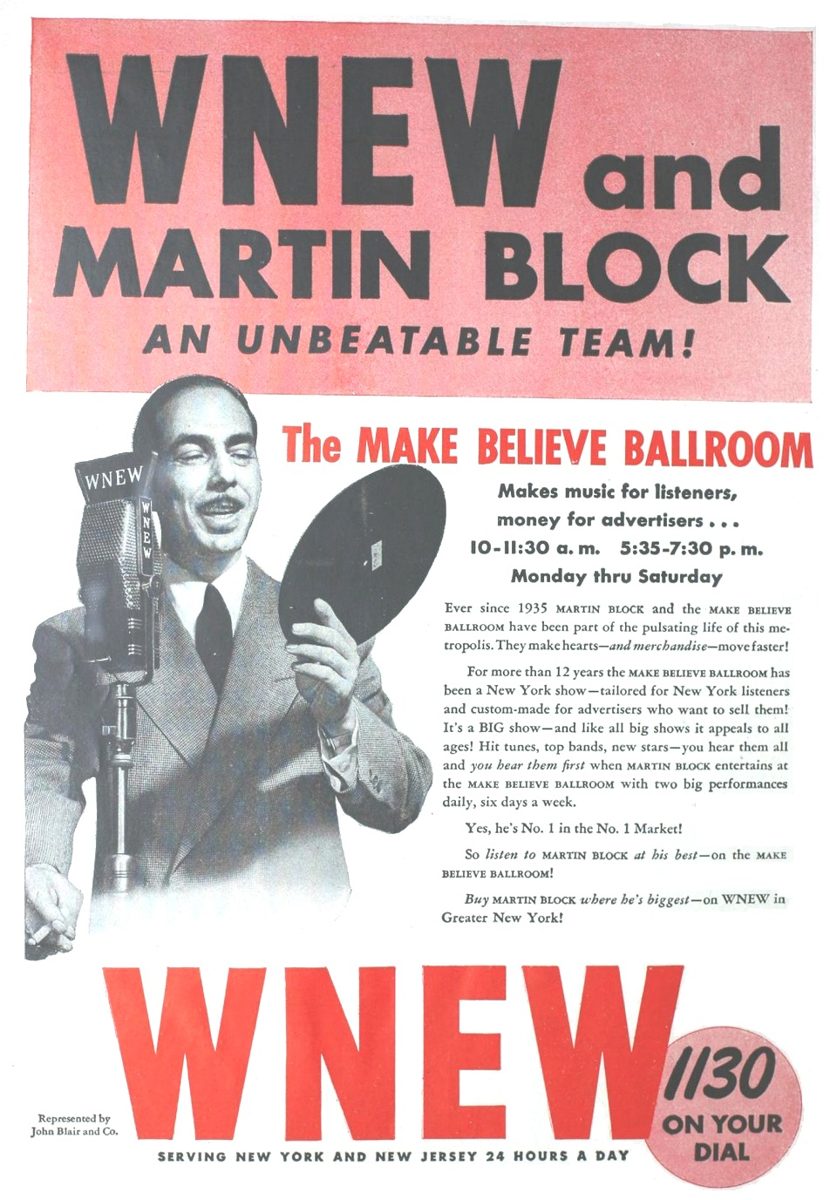
"Disc jockey" enters the language, for Martin Block

Walter Winchell; Martin Block · New York, NY

A 1947 trade-press advertisement for WNEW and Martin Block's "Make Believe Ballroom" program (same program the 1935 coinage refers to; no image from 1935 itself was found)
Advertisement, The Billboard magazine, Aug 9 1947, via Wikimedia Commons (public domain) · Public domain

Gossip columnist Walter Winchell is credited with coining "disc jockey" to describe WNEW's Martin Block, whose Make Believe Ballroom (borrowing its format and title from LA's Al Jarvis) created the illusion of a live ballroom broadcast.

Why it matters Names the role for the first time; Block becomes the first record-spinning radio host to become a national star under that name.

Sources disagree Sources disagree on the exact coinage year (1934, 1935, and 1937 are all cited) and on when the phrase first reached print; several sources point to a 1941 Variety magazine appearance, but no source located gives a specific issue or quote.

  • Radio Hall of Fame 2026-09 Trade hall-of-fame biography; confirms Block hired at WNEW late 1934 and became the first record-spinning radio star. Read September 2026.
  • Arcane Radio Trivia 2026-09 Dedicated radio-etymology research blog; gives 1934/1937 as competing coinage years, no 1941 citation found here. Read September 2026.
On the timeline →
1947

Two rival claims to the first twin-turntable DJ set

Jimmy Savile; Ron Diggins · Leeds and Boston, Lincolnshire, UK

Savile's own autobiography claimed he first ran two turntables and a mic at the 'Grand Records Ball' at the Guardbridge Hotel; the same year, Lincolnshire radio engineer Ron Diggins built his twin-deck 'Diggola' rig for a Swineshead Land Army harvest dance.

Why it matters Marks Britain's transition from live bands to record-based dances, but the two men's claims to being first collide, and neither is airtight.

“It took me about six weeks to build the first Diggola. We couldn't get plywood in those days, so soon after the war. So I had to make it out of coffin boards.” (Ron Diggins, quoted in DJ History)

Sources disagree Savile has 'only his own word' and no known photos; Diggins has photographic documentation, and DJ Magazine later named him the world's first disc jockey. A 2021 London Review of Books piece adds that twin-turntable rigs were illustrated in the 1929 BBC Handbook and advertised in Gramophone magazine by 1931, and notes further pre-Savile precedents (Bob Casey, New York, 1958; Régine Zylberberg, Paris, 1953), undercutting any single 'first.'

  • The Ransom Note 2026-09 Music-journalism piece weighing both claims and citing the 1929 BBC Handbook and 1931 Gramophone ad; read September 2026.
  • DJ History 2026-09 Oral-history piece on Diggins with the coffin-boards quote and September 1947 Land Army date; read September 2026.
  • London Review of Books 2021-10 LRB blog post naming Bob Casey and Régine as further complicating precedents; read September 2026.
On the timeline →

Microgroove 1948 to 1972

1954

Garrard 301 becomes the idler-drive broadcast standard

Garrard Engineering · Swindon, UK

A Garrard 301 idler-drive turntable
Photo: Jacques (Cape Town), via Wikimedia Commons (CC BY 2.0) · CC BY 2.0

The 301's rubber idler wheel, driven off a synchronous motor, became the transcription turntable the BBC and broadcasters worldwide standardised on for high-torque, low-wow playback.

Why it matters Idler drive was the dominant professional turntable technology before belt and direct drive existed, and it's what pre-hip-hop radio and early club DJs actually cued records on.

  • Hi-Fi News 2026-09 Trade hi-fi publication technical history of the 301; read September 2026.
On the timeline →
1961

Acoustic Research's AR-XA popularises belt drive

Edgar Villchur; Acoustic Research · Cambridge, MA

Villchur separated the motor from the platter, linking them with a rubber belt to isolate motor rumble and vibration from the stylus, a cheap, quiet alternative to idler drive that AR sold in the hundreds of thousands.

Why it matters Belt drive supersedes idler drive through the 1960s-70s hi-fi market and becomes the dominant format everywhere except the DJ booth, where direct drive would soon take over instead.

On the timeline →
1969

Francis Grasso pioneers slip-cueing and beatmatching at the Sanctuary

Francis Grasso · New York, NY

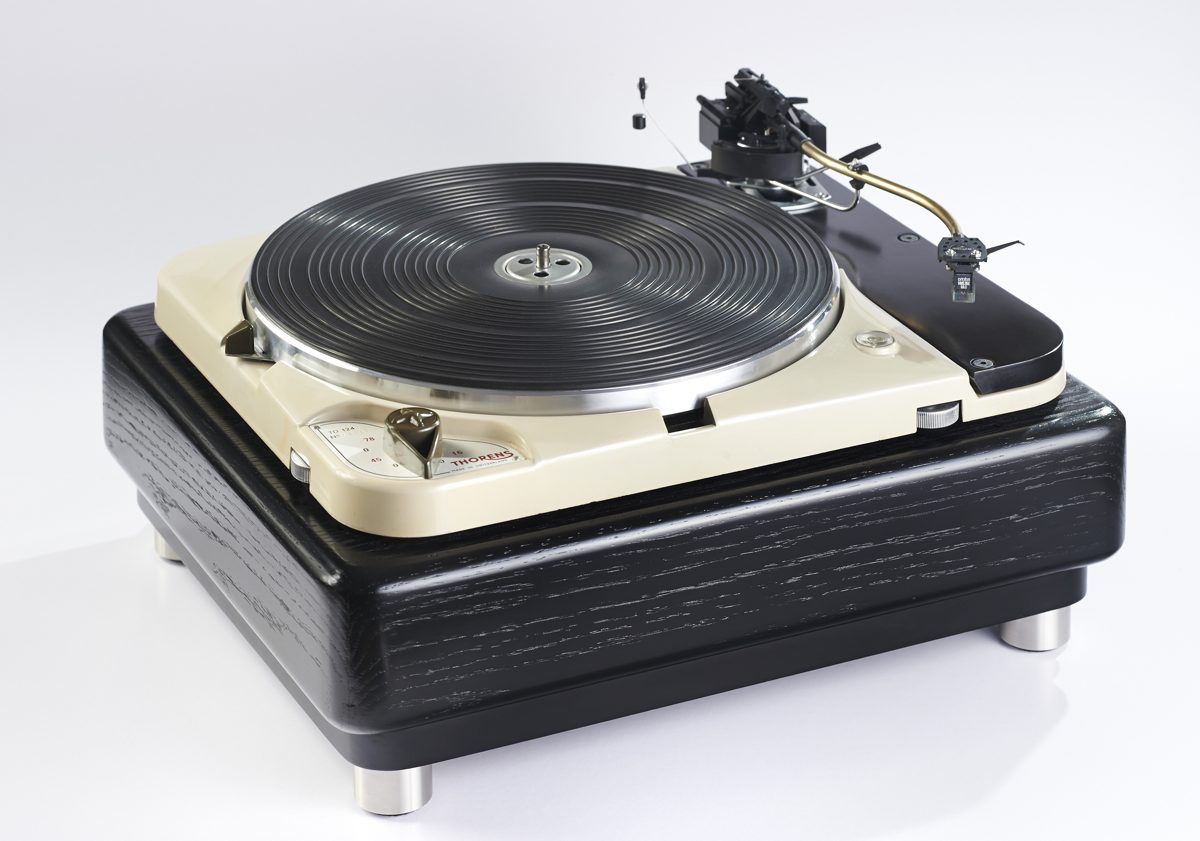
A Thorens TD124 MkI turntable, the type of belt/idler-drive deck period DJs like Francis Grasso mixed on
Photo: Nic Baleta, via Wikimedia Commons (CC BY 2.0) · CC BY 2.0

At the Sanctuary, a former church turned club, Grasso used a felt slip-mat to hold a record still on a spinning platter and release it on cue, letting him mix two records' beats together continuously rather than stopping between songs.

Why it matters Considered the origin of continuous beatmixing as a DJ skill, a direct ancestor of both disco and hip-hop turntable technique.

“You can see the reflection off the record, you can see the different shades of the black. I got so good I would just catch it on the run.” (Francis Grasso, interviewed by DJ History, 4 Feb 1999)
  • DJ History 1999-02 Interview conducted 4 February 1999 in Brooklyn; read September 2026.
On the timeline →
1970

Technics SP-10: the first direct-drive turntable

Shuichi Obata; Matsushita Electric (Technics) · Osaka, Japan

A Technics SP-10 Mk2 direct-drive turntable (the Mk2 revision; no photo of an original 1970 SP-10 unit was found)
Photo: Jacques (Cape Town), via Wikimedia Commons (CC BY 2.0) · CC BY 2.0

Engineer Shuichi Obata's motor coupled directly to the platter rim, eliminating the belt or idler wheel and the noise/wear that came with them, sold as a bare motor unit for broadcasters and audiophiles to build a turntable around.

Why it matters Direct drive's instant start-up speed and torque is what later made accurate cueing, beatmatching and eventually scratching physically possible; it underwrites every later Technics DJ deck.

Sources disagree Technics' own current heritage page dates the SP-10 to 1970; several other accounts (including older Technics marketing) cite 1969 as the launch year.

  • Technics (Panasonic) 2026-09 Official brand heritage page, dates SP-10 to 1970; read September 2026.
On the timeline →
1971

First purpose-built DJ mixer reaches the market: the Bozak CMA-10-2DL

Rudy Bozak; Alex Rosner · New York, NY / Darien, CT

Sound engineer Alex Rosner, who had already rigged a red-painted cueing prototype nicknamed 'Rosie' for club use, worked with speaker-maker Rudy Bozak to turn a repurposed broadcast mixer into the CMA-10-2DL (rotary knobs, headphone cueing, built for continuous disco play).

Why it matters The first mixer designed around a DJ's actual needs (cueing the next record in headphones while the crowd hears the last one); it became the fixture in booths at the Loft, Studio 54 and the Paradise Garage for a decade.

“The cueing system was one of my old-fashioned adventures. They called it the Rosie because it was painted red. It was really primitive. And not very good.” (Alex Rosner, interviewed by DJ History)

Sources disagree Some sources instead credit the GLi 3800 (mid-1970s) or the 1977 GLI PMX 7000/Citronic SMP101 as the first mixer with a horizontal crossfader, since the Bozak used rotary pan controls rather than a slider.

  • DJ History 2026-09 Interview/profile of Rosner with the Rosie quote and Bozak collaboration date of 'around 1968'; read September 2026.
  • Reverb 2026-09 Dealer listing corroborating 1971 design date and disco-era use; read September 2026.
On the timeline →

Two turntables 1972 to 1988

1972 October

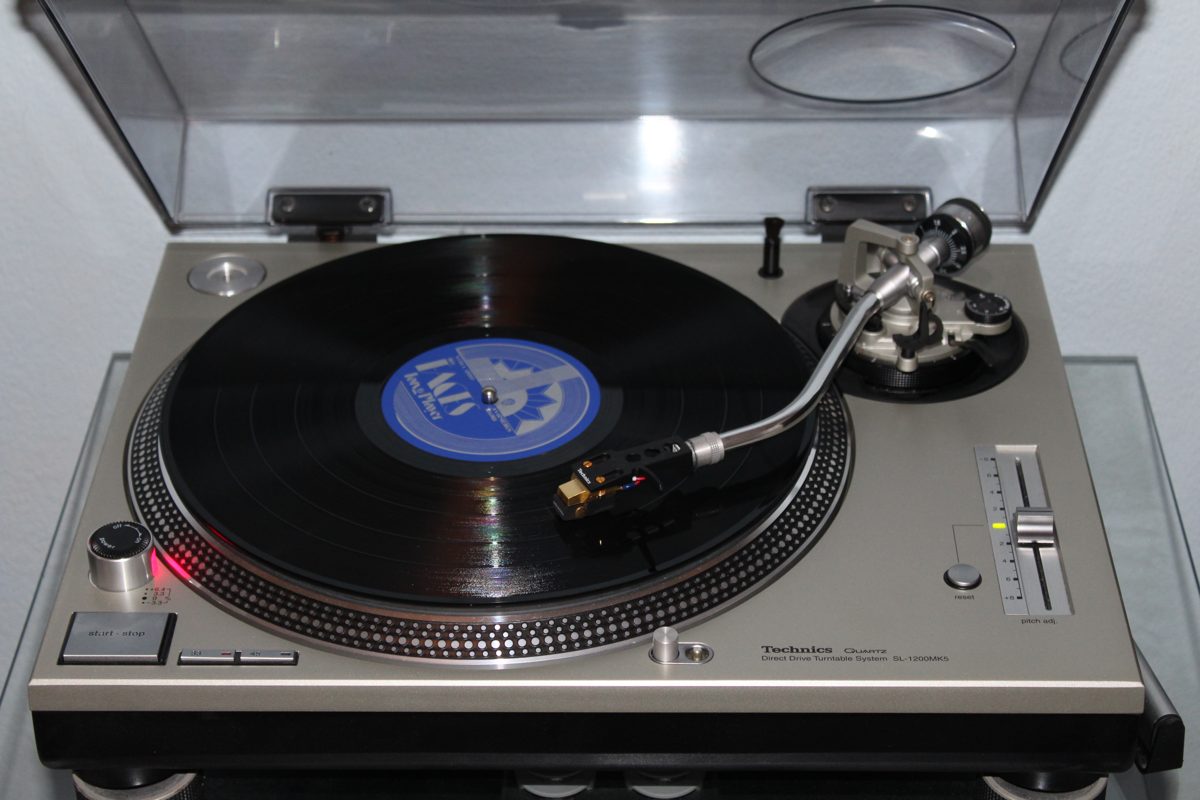
Technics SL-1200 launches

Technics (Matsushita Electric) · Osaka, Japan

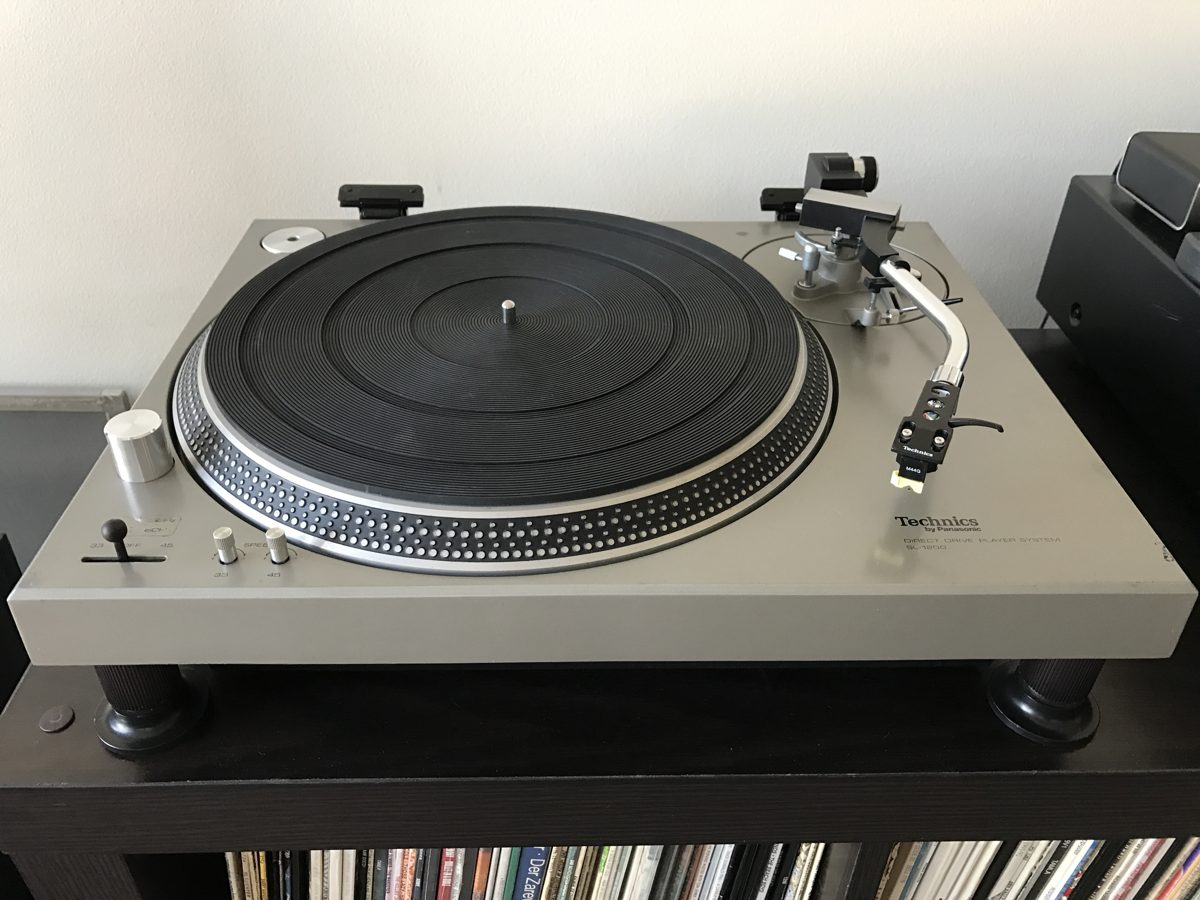
An original Technics SL-1200 turntable from 1972
Photo: BMRR, via Wikimedia Commons (CC BY-SA 4.0) · CC BY-SA 4.0

Built on the SP-10/SL-1100 direct-drive line, the SL-1200 paired a high-torque direct-drive motor with a die-cast aluminium chassis, priced at ¥59,800 in Japan and aimed at audiophiles, but quickly adopted by early Bronx DJs including Kool Herc for its speed stability and instant restart.

Why it matters Becomes the deck the entire hip-hop and club DJ tradition is built on, years before Technics marketed a DJ-specific model.

  • Technics (Panasonic) 2026-09 Official heritage page; October 1972 launch, torque and beatmatching claims; read September 2026.
  • Audio Database (Japanese catalogue archive) 2026-11 Gives the original SL-1200's ¥59,800 Japanese price. The $350 often quoted is the US price of the 1979 SL-1200MK2, from a November 1979 advert; read November 2026.
On the timeline → Every SL-1200 model →
1973 August 11

DJ Kool Herc debuts the merry-go-round at 1520 Sedgwick Avenue

DJ Kool Herc (Clive Campbell); Cindy Campbell · The Bronx, New York, NY

1520 Sedgwick Avenue, the Bronx apartment building where Kool Herc threw his first block party
Photo: Bigtimepeace, via Wikimedia Commons (public domain, own work) · Public domain

At his sister Cindy's back-to-school party in the building's recreation room, 16-year-old Herc used two copies of the same record to loop and extend its instrumental break (the section dancers responded to most), back-cueing one deck as the other played out.

Why it matters Widely credited as hip-hop's founding technique and founding date: turning a five-second break into an endless loop is the DNA of breakbeat DJing and, from it, rap.

  • Rock & Roll Hall of Fame 2026-09 Induction profile (2023); read September 2026.
  • NPR 2023-07 50th-anniversary reporting on the party and merry-go-round technique; read September 2026.
On the timeline →
1974

GLi 3800 brings the horizontal crossfader to the block party

GLi, Inc. · Brooklyn, NY

GLi's compact 3800 mixer gave DJs two turntable channels, a mic input and a horizontal crossfader operated by hand, a natural fit for the cutting and mixing early Bronx DJs, including Kool Herc, were developing.

Why it matters The horizontal crossfader, worked by the DJ's hand rather than a rotary knob, is the physical interface that later makes scratching and quick-mix cutting possible.

Sources disagree Release year is given inconsistently across sources as 1973, 1974 and 1975. A separate strand of DJ-mixer histories instead credits the 1977 GLI PMX 7000 or Citronic SMP101 as the first US mixer with a horizontal crossfader, treating the 3800's crossfader claim as unverified.

  • In Sheep's Clothing Hi-Fi 2026-09 Coverage of Kool Herc's own gear (later auctioned at Christie's), describing his GLi 3800 use; read September 2026.
  • Vice 2026-09 Dates the 'first US mixer with horizontal crossfader' claim instead to the 1977 GLI PMX 7000; read September 2026, cited for the dispute.
On the timeline →
1975

Grand Wizzard Theodore stumbles onto scratching

Grand Wizzard Theodore (Theodore Livingston) · The Bronx, New York, NY

DJ Grand Wizzard Theodore, portrait (a later-era photo; no image survives from the 1975 event itself)
Photo: Flintmichigan, via Wikimedia Commons (CC BY-SA 4.0) · CC BY-SA 4.0

Playing The Incredible Bongo Band's 'Apache' loudly, 12-year-old Theodore held the record against the moving platter to stop it fast when his mother scolded him; the back-and-forth motion made a rhythmic sound he then deliberately repeated, debuting it publicly at the Sparkle club in 1977.

Why it matters Scratching turns the turntable itself into a played instrument rather than just a playback device, and becomes the signature sound of hip-hop DJing.

“He had a vision of scratching records, but he couldn't really present it to the people because he didn't know how to tell his mind to tell his fingers to present it to the people.” (Grand Wizzard Theodore, on Grandmaster Flash, quoted by KEXP)

Sources disagree The invention itself is credited to Theodore in most accounts, but Grandmaster Flash's camp has made competing claims to originating scratch technique; Theodore's own quote above concedes Flash had the idea first without the technique to execute it. Sources also disagree on whether the accidental discovery was 1975 (age 12) versus other tellings that place it closer to his 1977 public debut.

  • KEXP (public radio) 2023-02 50 Years of Hip-Hop podcast episode with the full account and Theodore quote; read September 2026.
  • WUSF (NPR member station) 2023-12 Public-radio retelling, notes the 1975 vs 1977 date confusion; read September 2026.
On the timeline →
1975

Grandmaster Flash develops quick-mix theory

Grandmaster Flash (Joseph Saddler) · The Bronx, New York, NY

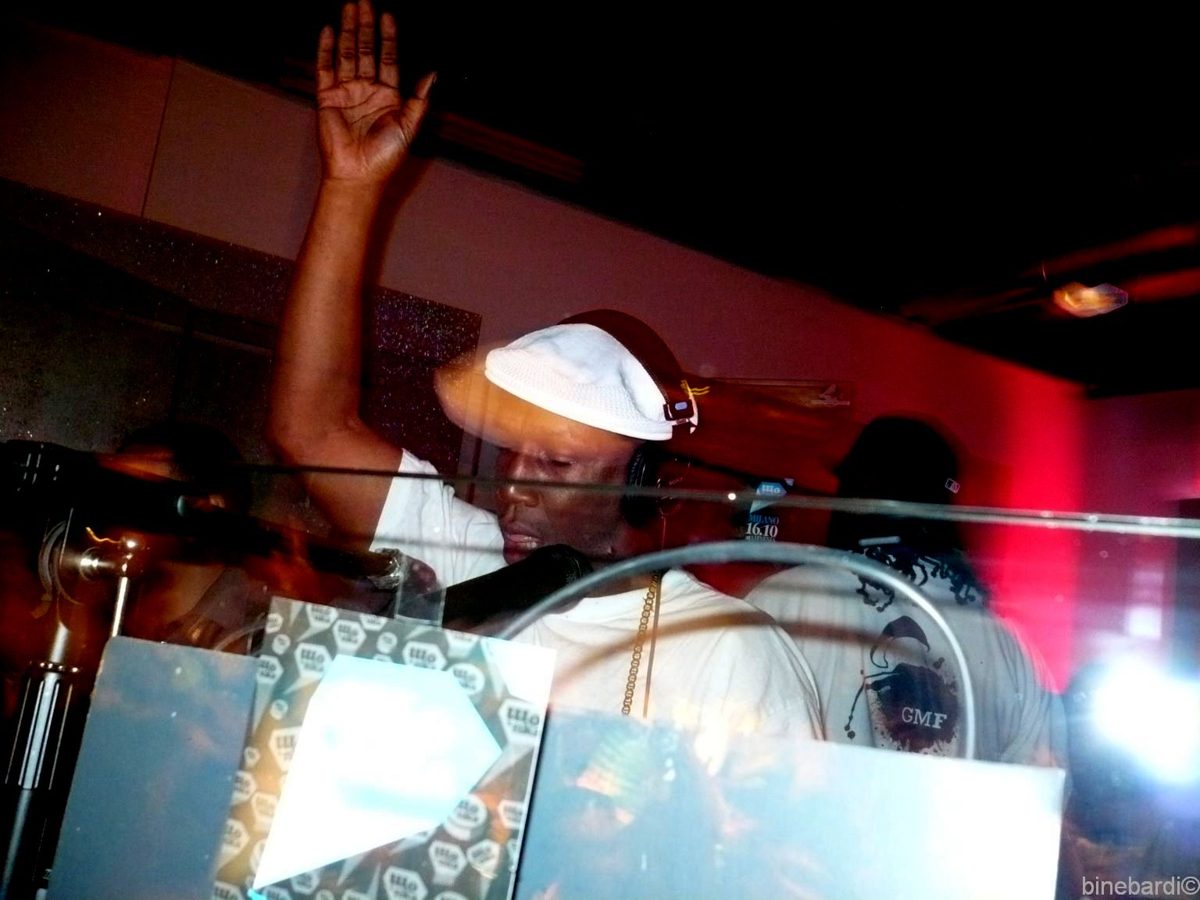
Grandmaster Flash performing live, 2008 (a later-era photo; no image survives from 1975)
Photo: Bine Bardi, via Wikimedia Commons (CC BY 2.0) · CC BY 2.0

Flash worked out a repeatable, near-mathematical method for cueing a break in his headphones on one deck while the other played, switching between them on the beat with the mixer to loop or 'punch phrase' short segments (often horn hits) over the rhythm.

Why it matters Turned Herc's merry-go-round from a feel-based trick into a codified, teachable technique; quick-mix theory, backspin and punch phrasing are still named DJ skills today.

  • Columbia Daily Spectator 2024-02 Reporting on Flash discussing quick-mix theory's development in his own words; read September 2026.
On the timeline →
1979

Technics SL-1200MK2 is built for club DJs

Technics (Matsushita Electric) · Osaka, Japan

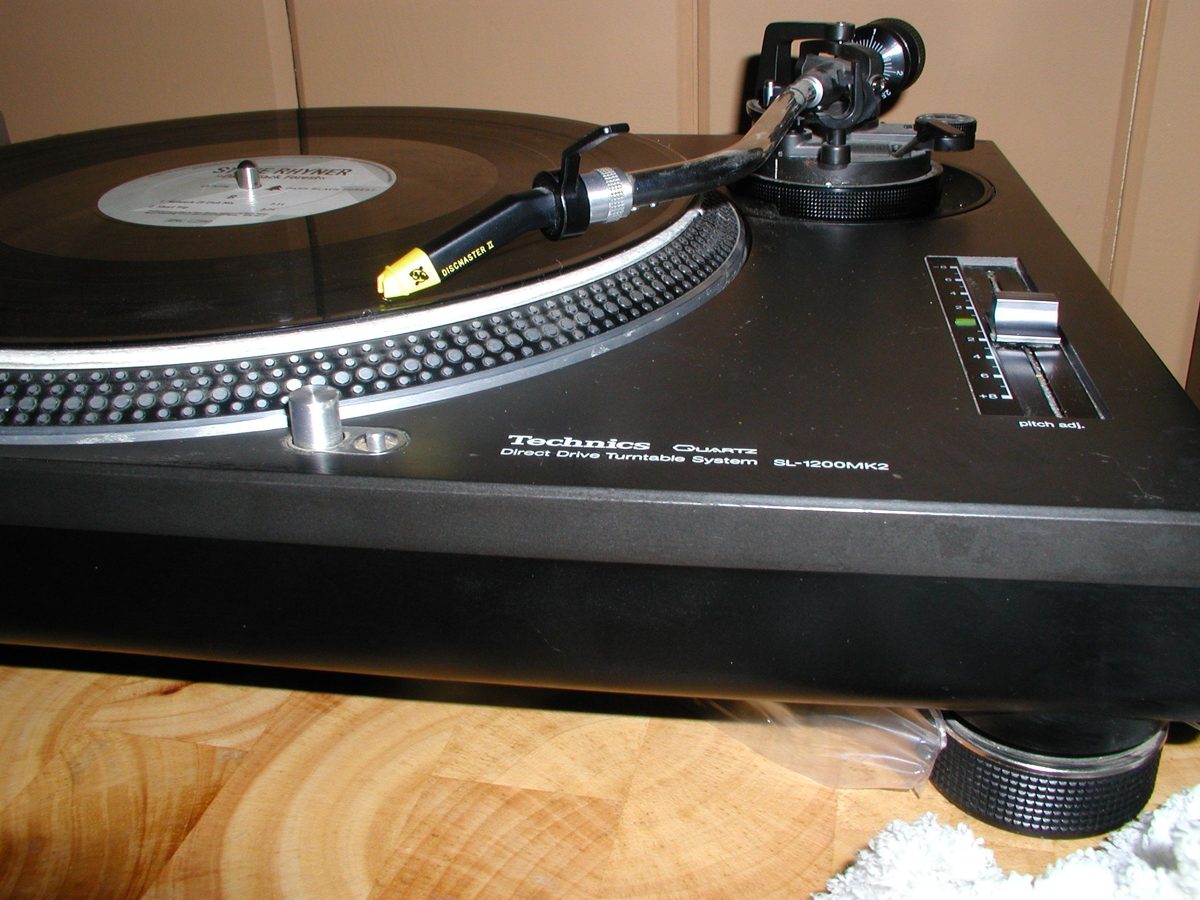
A Technics SL-1200MK2 turntable
Photo: Adrian DuMay, via Wikimedia Commons (CC BY 2.0) · CC BY 2.0

After sending staff to study Chicago DJs directly, Technics added a quartz-locked pitch control operated by a slider fader (accurate to ±8%), high torque (1.5 kgf·cm, 0.7-second start), and vibration-damping rubber feet, a purpose-built professional DJ deck rather than a repurposed hi-fi one.

Why it matters The pitch fader made tempo-matching precise and repeatable rather than a matter of feel, and the MK2's torque and durability made it the global club/hip-hop standard for the next three decades.

  • Technics (Panasonic) 2026-09 Official heritage page detailing 1979 MK2 specs and Chicago DJ research; read September 2026.
On the timeline → Every SL-1200 model →
1981

Rane is founded

Linda Arink; Dennis Bohn · Mukilteo, WA

The Rane Corporation logo, the DJ-mixer maker founded in 1981
Rane Corporation logo, via Wikimedia Commons (PD-textlogo) · Public domain (PD-textlogo)

Former Phase Linear engineers Arink and Bohn founded Rane, which entered the DJ mixer market at the request of disco sound designer Richard Long and would go on to define scratch-mixer technology through the 1990s and 2000s.

Why it matters Rane becomes the engineering backbone of turntablism-era mixing; its TTM series and, later, Seventy-Two would set the standard other brands chased.

  • Rane Corporation 2026-09 Official company history page, confirms 1981 founding in Washington State; read September 2026.
On the timeline →
1981 July

"Adventures of Grandmaster Flash on the Wheels of Steel" is released

Grandmaster Flash; Sugar Hill Records · New York, NY

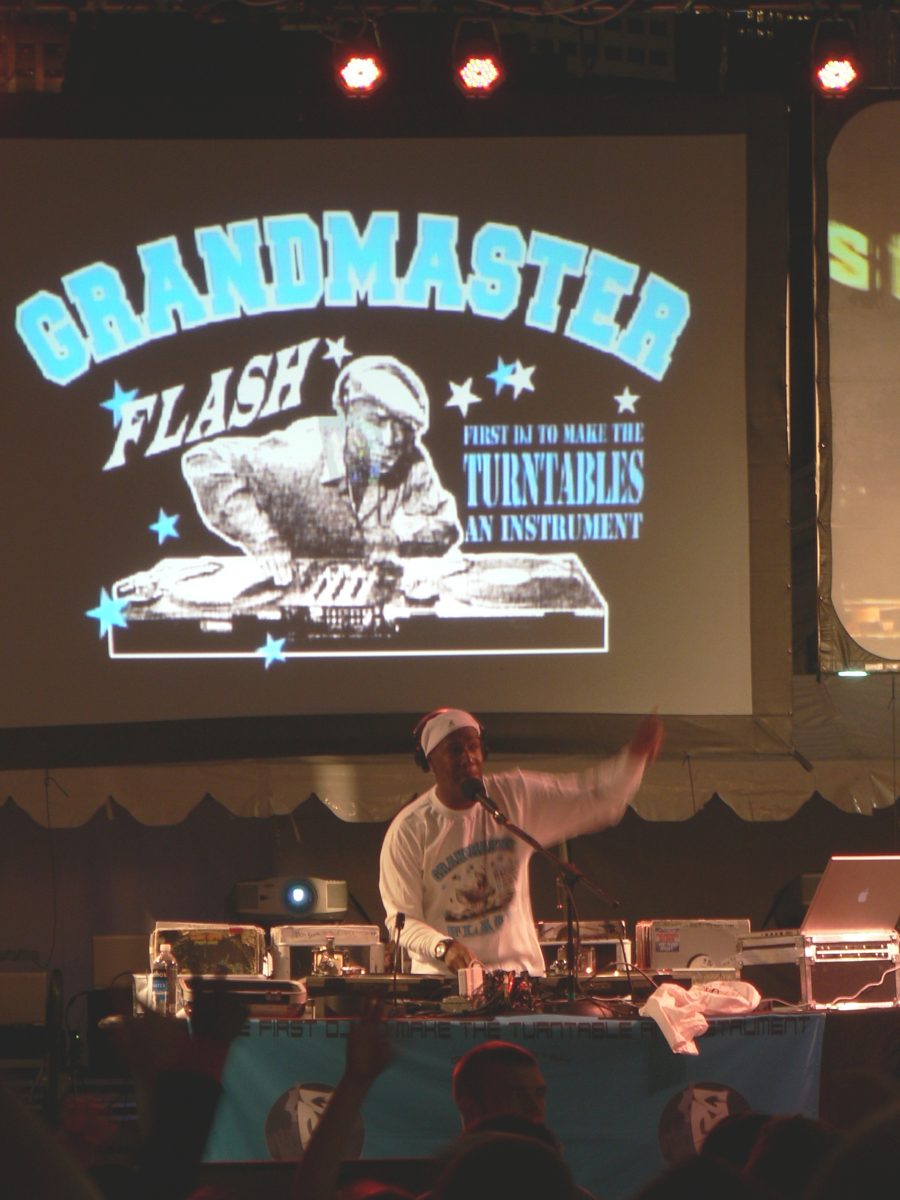
Grandmaster Flash performing live, the DJ behind the 1981 turntablism landmark "Adventures on the Wheels of Steel"
Photo: stu_spivack, via Wikimedia Commons (CC BY-SA 2.0) · CC BY-SA 2.0

A largely solo recording of Flash cutting, scratching, backspinning and punch-phrasing across three turntables and multiple records live in the studio, the first commercial single built entirely from DJ turntable technique.

Why it matters Put quick-mix theory and scratching on wax for the first time, letting DJs outside New York study techniques they could otherwise only see live.

Sources disagree Some later retrospectives treat this recording's rapid alternation between two copies of a record as the earliest documented beat-juggle-style routine, predating Steve Dee's 1990 New Music Seminar win, the point at which the wider DJ world named and codified 'beat juggling,' by nine years. Flash's own camp frames it as quick-mix theory rather than juggling specifically, so the two are not universally treated as the same technique.

  • Discogs 2026-09 Release documentation, Sugar Hill Records 1981; read September 2026.
  • San Diego Reader 2019-10 Music-press piece treating the 1981 recording as an early beat-juggling document; read September 2026.
On the timeline →
1985

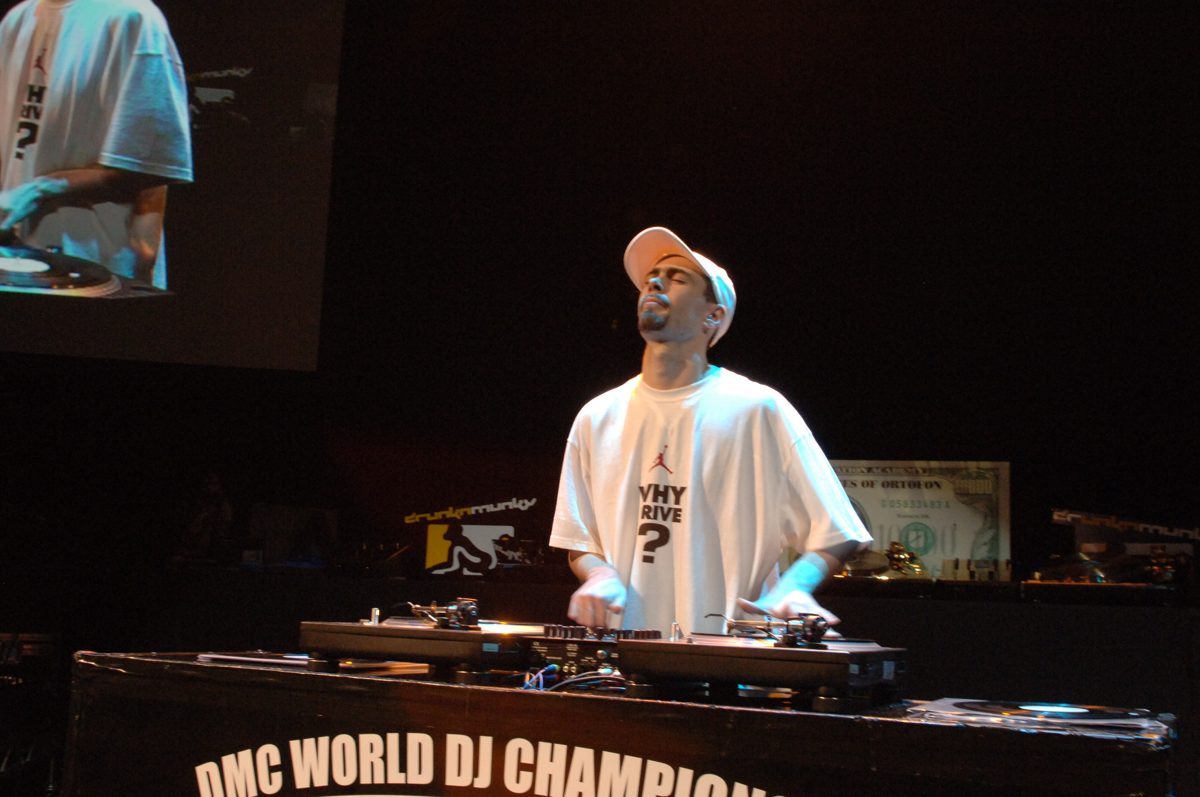
DMC World DJ Championships launch

Disco Mix Club (DMC); Roger Johnson (first champion) · London, UK

DJ Fly competing at the DMC World DJ Championships (2008 edition), the battle-DJ series launched in 1985
Photo: Deejayfly, via Wikimedia Commons (CC BY-SA 3.0) · CC BY-SA 3.0

DMC, a UK DJ remix-service label founded in 1983, launched an annual world DJ competition; the first event was won by Londoner Roger Johnson.

Why it matters Turns turntable technique into a judged, spectator sport and becomes the venue where scratching, then beat juggling, then full turntablism routines are pushed forward and popularised on video worldwide.

On the timeline →
1986

DJ Cheese wins DMC World with scratching, resetting the format

DJ Cheese · London, UK

DJ Cheese won the 1986 DMC World Final in London over Dutch finalist Orlando Voorne, whose own question from the stage (was this 'a mixing competition or a scratching competition?') captured a fight over what DMC battles should reward; Cheese answered by combining scratching with strong mixing.

Why it matters Widely cited by later DJ press as the moment scratch technique, not just blend skill, started deciding DMC's world title, pulling the championship toward the hip-hop DJ tradition.

“I didn't realize none of that. I just knew by the crowd reaction I was going to win.” (DJ Cheese, quoted by DMC)

Sources disagree Some later retrospectives flatly call 1986 'the first battle decided by turntable technique,' but DMC's own retelling frames it more narrowly, as a live clash over whether scratching or mixing should define the competition, which Cheese won by doing both.

  • DMC World DJ Championships 2026-09 DMC's own retrospective post on the 1986 final, with the Voorne exchange and Cheese quote; read September 2026.
  • DMC World DJ Championships 2026-09 Official champions archive confirming DJ Cheese as 1986 winner; read September 2026.
On the timeline →
1986

The scratch vocabulary grows: chirp, flare and crab

DJ Jazzy Jeff; DJ Cash Money; DJ Flare; DJ Qbert · Philadelphia, PA; San Francisco Bay Area, CA

DJ Q-bert performing at the DMC World DJ Championships, Lyon, France, 2006 (a much later-era photo; Q-bert is one of the DJs credited with growing scratch vocabulary, but no 1986 image exists)
Photo: Sylvain Habib (Grenoble, France), via Wikimedia Commons (CC BY-SA 2.0) · CC BY-SA 2.0

DJs kept naming new scratch patterns: the chirp, credited to Jazzy Jeff and Cash Money in Philadelphia; the flare, credited to DJ Flare (a scratch DJ since 1983); and the crab, credited to DJ Qbert, commonly dated to a mid-1990s DMC USA/Vestax-Japan period.

Why it matters Each technique became part of the standard turntablist vocabulary judged at DMC and ITF battles through the 1990s, but unlike the transform scratch, none of them could be pinned to a specific, source-verified invention date.

Sources disagree None of these three has a solid, citable invention year. The chirp's earliest reference found is a 1986 scratch-tutorial claim of uncertain reliability. The flare's '1987' invention date circulates widely but traces to an uncited Wikipedia line with no locatable source. The crab's '1995, DMC USA finals / Vestax Japan' story is repeated across many DJ-history sites, all apparently drawing on the same unsourced account; no primary interview or trade-press piece confirming it directly could be located.

On the timeline →
1987

The transform scratch reaches wax: 'The Magnificent Jazzy Jeff'

DJ Jazzy Jeff; DJ Cash Money; DJ Spinbad · Philadelphia, PA

DJ Jazzy Jeff performing in Cambridge, England, 2005 (a later-era photo; no image survives from 1987)
Photo: Neil Rickards (London), via Wikimedia Commons (CC BY 2.0) · CC BY 2.0

Philadelphia DJs Spinbad, Cash Money and Jazzy Jeff worked on a technique chopping sound into stuttering bursts with the crossfader, nicknamed 'transform' after the Transformers cartoon's sound effects; Jazzy Jeff first recorded it, on 'The Magnificent Jazzy Jeff' (Rock the House, 7 April 1987).

Why it matters One of the first named scratch patterns to become a battle-DJ standard, and the clearest example of the Philadelphia scratch scene feeding directly into DMC-era competition technique.

Sources disagree Credit is genuinely three-way and contested: DJ Spinbad is usually named as having originated a slower, rudimentary version first (no confirmed year located); Cash Money is credited with developing it into a battle weapon he used winning the 1987 New Music Seminar and 1988 DMC titles; Jazzy Jeff is credited as first to record it, in 1987.

  • MusicRadar 2026-09 DJ-gear trade retrospective naming Spinbad, Cash Money and Jazzy Jeff and the 'couple of years' gap between recording and release; read September 2026.
  • Discogs 2026-09 Release documentation for Rock the House, dated 7 April 1987; read September 2026.
On the timeline →

The CD years 1988 to 2007

1988

DJ Cash Money wins DMC World

DJ Cash Money · London, UK

DJ Cash Money performing at the Roots Picnic, 2009 (a later-era photo; no image survives from the 1988 DMC win)
Photo: S. Sessoms Jr. (Ryakin4), via Wikimedia Commons (CC BY-SA 4.0) · CC BY-SA 4.0

Philadelphia's DJ Cash Money won the 1988 DMC World Championship, a title he later called his 'most cherished,' building his routine around the transform scratch and quick-witted freestyle cuts answering a rival's diss with a scratched LL Cool J sample.

Why it matters Cemented the transform scratch and fast-reflex 'answer' scratching as championship-level technique; Technics later made Cash Money the first inductee into its DJ Hall of Fame in 1998.

  • NAMM Oral History 2012-11 Oral history entry dated 16 November 2012, confirming the 1988 DMC World title and transform-scratch credit; read September 2026.
  • DMC World DJ Championships 2026-09 Official champions archive confirming Cash Money as 1988 winner; read September 2026.
On the timeline →
1990

Steve Dee wins the New Music Seminar with beat juggling

DJ Steve Dee · New York, NY

Dee, who called his technique simply 'the Funk,' won the 1990 New Music Seminar DJ Battle for World Supremacy using rapid alternation between two copies of a record to reassemble drum patterns in real time, the technique the wider DJ world would call beat juggling.

Why it matters Beat juggling becomes turntablism's second core discipline alongside scratching, and Dee's X-Men/X-Ecutioners circle carries it through the 1990s battle scene.

“[He] created one of the two major techniques used in turntablism and battle DJing, he named it 'The Funk' but others misappropriated it as 'Beat Juggling.'” (NAMM Oral History, on DJ Steve Dee)
On the timeline →
1990

Vestax's PMC-05 becomes the battle DJs' mixer of choice

Vestax; DJ Trix · Tokyo, Japan

Working from a DJ's own modified PMC-05 mkII, battle DJ Trix helped design the layout Vestax released as the PMC-05, a hamster-switchable, photo-coupler-crossfader mixer built specifically for scratch technique rather than adapted from disco mixing gear.

Why it matters The PMC-05 line becomes the standard battle mixer of the DMC/turntablism era, used by DJ Qbert, Mix Master Mike, DJ Craze and A-Trak, establishing the 'hip-hop style' mixer as its own product category.

Sources disagree The exact release year of the DJ-Trix-designed PMC-05 is inconsistently reported; some retailer/reissue pages date later PMC-05 Pro revisions to 1997, while DJ-history coverage places the original Trix collaboration around 1990. No manufacturer press date was located to settle it.

  • DJWORX 2026-09 DJ-gear trade site review with product lineage background; read September 2026.
On the timeline →
1991

Steve Dee places second at the DMC USA finals

DJ Steve Dee · United States

A year after his New Music Seminar win, Dee placed runner-up at the DMC USA finals, cementing beat juggling's place in the American battle-DJ circuit alongside scratch technique.

Why it matters Marks beat juggling's move from one DJ's signature move into a skill the whole US competitive scene had to learn to answer.

  • NAMM Oral History 2012-11 Same oral-history entry; cross-referenced against DMC's own champions archive, which lists Q-Bert as 1991 DMC World runner-up (a separate, higher-tier event from the DMC USA final). Read September 2026.
On the timeline →
1992

The Beat Junkies form

J-Rocc; Rhettmatic; Melo-D · Cerritos / Orange County, CA

DJ Rhettmatic, a founding Beat Junkies member, in a 2021 interview still (a much later-era photo; no image survives from 1992)
Frame: KELAVISION (YouTube), via Wikimedia Commons (CC BY 3.0) · CC BY 3.0

J-Rocc founded the Beat Junkies with Rhettmatic and Melo-D, drawing in DJs from mobile-DJ units around Los Angeles and Orange County; Babu, Shortkut, D-Styles and others joined over the following years, eventually growing the crew to thirteen members.

Why it matters Became one of the three seminal crews (with the Invisibl Skratch Piklz and X-Ecutioners) credited with reviving turntablism as a competitive and recording art through the 1990s.

  • Beat Junkies (crew's own site) 2026-09 Crew's own about page, confirms 1992 founding in Los Angeles; read September 2026.
  • NAMM Oral History 2026-09 Oral-history category page corroborating crew members and formation era; read September 2026.
On the timeline →
1994

The Invisibl Skratch Piklz take shape in the Bay Area

DJ Qbert; Mix Master Mike; DJ Apollo; DJ Disk; Shortkut; D-Styles · San Francisco Bay Area, CA

Mix Master Mike, a founding Invisibl Skratch Piklz member, performing in 2007 (a later-era photo; no image survives from 1994)
Photo: Michael Morel, via Wikimedia Commons (CC BY 2.0) · CC BY 2.0

A Bay Area crew built around Qbert and Mix Master Mike, who had performed together since the late 1980s under earlier names including Shadow of the Prophet and the Rocksteady DJs/Dream Team, settled on the name Invisibl Skratch Piklz and expanded to include DJ Disk, Shortkut and D-Styles.

Why it matters Pioneered treating a turntable crew like a band, layering drums, bass and scratched solos live, and became the dominant force in DMC/ITF-era battles.

Sources disagree The formation date is genuinely unsettled across sources: some trace the trio (Qbert, Apollo, Mix Master Mike) to 1989 under earlier names; KQED's own reporting says the Invisibl Skratch Piklz were 'officially established around 1993'; other outlets give 1994 or 1995 for when that specific name and lineup solidified. No single source was found that resolves this cleanly.

  • KQED (public radio arts desk) 2026-09 Reporting dating the crew's official establishment to 'around 1993' and describing the Shadow of the Prophet/Rocksteady DJs lineage; read September 2026.
On the timeline →
1994

DMC asks the Invisibl Skratch Piklz to stop competing

Invisibl Skratch Piklz; Disco Mix Club (DMC) · United States / United Kingdom

After the crew (as the Rocksteady DJs and then the Dream Team) won DMC World titles three years running, Mix Master Mike says DMC 'politely asked' them to retire from competition rather than keep entering.

Why it matters If true as told, marks turntablism's dominant crew being pushed out of the format that had made them famous, a story the crew itself has repeated as an origin point for shifting toward recorded music instead of competition.

“After dominating for three years in a row, his crew was politely asked to retire from the DMC competition ... we felt like it wasn't fair to us because we got a lot in the tank.” (Mix Master Mike, quoted by KQED)

Sources disagree This claim is widely repeated in DJ journalism as crew legend, sourced to Mix Master Mike's own account, but no on-the-record statement from DMC itself confirming or denying it could be located in this search. One secondary aggregator (found via search, not independently verified here) asserts the DMC World Championship's own website disputes the story; that counter-claim could not be traced to a specific DMC page and is flagged, not confirmed.

On the timeline →
1995

DJ Babu coins "turntablism"

DJ Babu (Chris Oroc) · Los Angeles, CA

DJ Babu of Dilated Peoples, photographed 2010 (a later-era photo; no image survives from 1995)
Photo: Rohdd, via Wikimedia Commons (CC BY 2.0) · CC BY 2.0

Beat Junkies member DJ Babu coined the word 'turntablism' in 1995 to distinguish DJs who manipulate records, styli, turntable speed and the mixer to create new sounds from DJs who simply play and blend records.

Why it matters Gave the emerging hip-hop scratch-DJ discipline its own name, separate from 'DJing' in the play-records sense, which stuck as the genre's standard term.

“The term 'turntablism' emerged in 1995 to reflect the artistic practices of the hip hop DJ ... to denote the difference between playing back records and using turntables to manipulate sound.” (The Vinyl Factory)
  • The Vinyl Factory 2026-09 Music-journalism history piece crediting DJ Babu's 1995 coinage; read September 2026.
  • MusicRadar 2026-09 Corroborates 1995 and Babu as 'the first one to go by the title of a turntablist'; read September 2026.
On the timeline →
1998

Rane TTM 54 sets the scratch-mixer standard

Rane · Mukilteo, WA

Developed with input from Spanish Harlem scratch DJs, the TTM 52/54 introduced a VCA fader system, adjustable crossfader curve and contour, reverse ('hamster') switch, and Rane's four-order full-kill EQ.

Why it matters Set the template for the 'turntablist mixer' as a distinct category, engineered around scratch technique rather than smooth disco blending.

  • Rane Corporation 2026-09 Official history page dating TTM 54 development and features to 1998; read September 2026.
On the timeline →
2001

DMC adds a World Team Championship

Disco Mix Club (DMC); Perverted Allies (first team champions) · London, UK

DMC's own results archive shows its first Team category winner in 2001: Perverted Allies, a UK/USA/Canada crew of Prime Cuts, Tony Vegas, Craze and Infamous, ahead of France's Birdy Nam Nam (2002) and C2C, who then won three years running from 2004-2006.

Why it matters Formalised the group-routine format (turntable crews choreographing multiple DJs together) that the Invisibl Skratch Piklz and Beat Junkies had already been pioneering outside DMC's individual-battle format for years.

  • DMC World DJ Championships 2026-09 Official champions archive; Team category results begin in 2001 with Perverted Allies. Read September 2026.
On the timeline →
2001 January

Final Scratch launches timecode-vinyl DJing

N2IT; Richie Hawtin; John Acquaviva · Amsterdam / NAMM, Anaheim, CA

Dutch company N2IT, with input from techno DJs Richie Hawtin and John Acquaviva, released Final Scratch: special vinyl pressed with a digital timecode that a normal turntable could play, letting a connected computer track needle position and control digital audio files.

Why it matters The first Digital Vinyl System (DVS); DJs kept the physical feel of records and turntables while gaining looping, pitch-shifting and an entire hard-drive of music where a record bag used to be.

  • Wikipedia (used only to locate underlying sourcing) 2026-09 Used solely to confirm the N2IT/Hawtin/Acquaviva attribution before locating corroborating trade coverage; not cited as the source of record.
  • Gearnews 2026-09 DJ-gear trade history of DVS technology dating Final Scratch to 2001; read September 2026.
On the timeline →
2001 July

Pioneer CDJ-1000 starts moving the booth off turntables

Pioneer · Tokyo, Japan

A Pioneer CDJ-1000 (MK2 variant) CD deck
Photo: Dj Fassbwoy, via Wikimedia Commons (CC BY-SA 4.0) · CC BY-SA 4.0

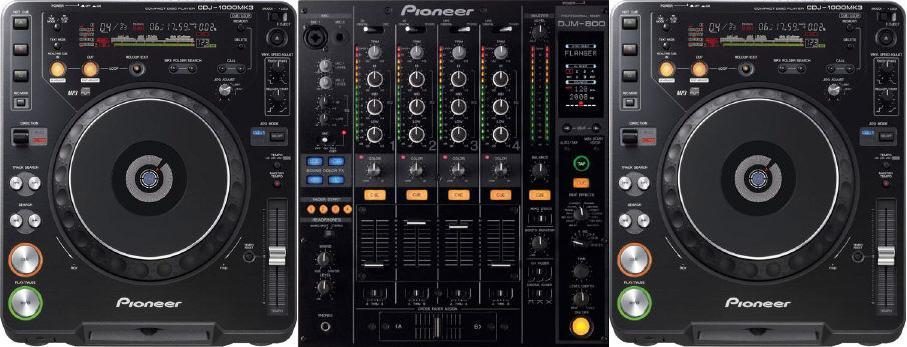
Pioneer's CDJ-1000 added a large touch-sensitive jog wheel with 'Vinyl Mode' motor start/stop simulation and an onscreen waveform, the first CD deck accepted as capable of emulating turntable cueing, pitch-bending and scratching closely enough for club use.

Why it matters Began the shift of the DJ booth from vinyl turntables to digital media players; Pioneer's own DJ controllers (starting with the DDJ-SX in 2012) followed over a decade later as software-first setups caught on.

  • Woodbrass (DJ retailer trade blog) 2026-09 Retrospective confirming 2001 launch, vinyl-emulation purpose, and 2012 DDJ-SX as Pioneer's first controller; read September 2026.
  • Equipboard 2026-09 DJ-gear reference corroborating July 2001 release and Vinyl Mode feature; read September 2026.
On the timeline →
2002 January

Stanton brings Final Scratch to market

Stanton Magnetics; N2IT · NAMM Show, Anaheim, CA

Stanton acquired and rebranded Final Scratch, debuting it as a Stanton product at the January 2002 NAMM Show and later partnering with Native Instruments to bring the software to Mac and PC.

Why it matters Moved timecode vinyl from a boutique techno-DJ tool into mainstream DJ retail.

  • Wikipedia (used only to locate underlying sourcing) 2026-09 Used only to confirm the January 2002 NAMM date before it was corroborated by trade retrospectives; not cited as source of record.
  • Gearnews 2026-09 Corroborates Stanton's Final Scratch acquisition and NAMM debut; read September 2026.
On the timeline →
2004 May

Serato Scratch Live ships with the Rane SL1

Serato (Steve West, AJ Bertenshaw); Rane · Auckland, New Zealand / Mukilteo, WA

New Zealand company Serato partnered with Rane to launch Scratch Live: NoiseMap-encoded timecode vinyl (or CD) paired with the Rane SL1 audio interface, giving near-zero-latency digital vinyl control.

Why it matters Became the dominant DVS platform through the 2000s, reliable and tactile enough that it changed how working DJs carried and played music; record crates became optional even for scratch DJs.

“There was a video of me scratching on Serato Scratch Live that a lot of the other DJs saw, and that became a catalyst for other people adopting it.” (A-Trak, quoted by Serato)
  • Serato (The Drop) 2026-09 Official company retrospective, dates Scratch Live's 2004 launch with Rane and includes the A-Trak quote; read September 2026.
On the timeline →

The revival 2007 to 2026

2007 January

Native Instruments launches Traktor Scratch

Native Instruments · NAMM Show, Anaheim, CA

A Traktor Scratch timecode control vinyl on a turntable
Photo: Audiotecna, via Wikimedia Commons (CC BY 2.0) · CC BY 2.0

NI announced Traktor Scratch alongside its Audio 8 DJ interface on 18 January 2007, pairing Traktor software with timecode vinyl and CDs; the system shipped that April/May, giving Final Scratch/Serato a rival DVS platform.

Why it matters Broke Serato and Stanton's early duopoly on digital vinyl control, pushing DVS features (multiple timecode formats, better latency) forward through competition.

  • FutureMusic 2007-01 Contemporary trade-press announcement, dated 18 January 2007, with ship dates and pricing; read September 2026.
On the timeline →
2010 November 1

Panasonic ends Technics turntable production

Panasonic · Osaka, Japan

A Technics SL-1200MK5 turntable, the final variant in production when Panasonic ended the line in 2010
Photo: MärkJ2057, via Wikimedia Commons (CC BY-SA 4.0) · CC BY-SA 4.0

After 35-plus years making Technics analog turntables, Panasonic announced it was discontinuing the SL-1200/1210 line, citing collapsed demand (about 5% of sales a decade earlier) and the disappearance of the small parts suppliers the line depended on.

Why it matters Ended, for a time, the deck that had defined both hip-hop and club DJing for three decades, and set up its unexpected return.

“Panasonic has regretfully taken the decision to leave this market.” (Panasonic official statement)
  • Resident Advisor 2010-11 News report quoting Panasonic's statement in full; read September 2026.
On the timeline →
2013 September

Serato folds DVS into Serato DJ, retiring Scratch Live

Serato · Auckland, New Zealand

Serato announced it would discontinue standalone Scratch Live, moving timecode-vinyl control into its controller-first Serato DJ software (initially via the Rane Sixty-Four and Pioneer DJM-900SRT), with Scratch Live support continuing through 2015.

Why it matters Ended the standalone DVS-software era; one application now had to serve both controller DJs and vinyl/CD scratch DJs, a merger that would later be rebranded Serato DJ Pro in 2018.

Sources disagree The name 'Serato DJ Pro', which the task asks to note, only appears in 2018 when Serato DJ and Serato DJ Intro were renamed DJ Pro and DJ Lite; the functional replacement of Scratch Live happened earlier, announced September 2013 with support through 2015.

  • MusicRadar 2013-09 Contemporary trade-press report on the September 2013 discontinuation announcement and 2015 support cutoff; read September 2026.
  • DJWORX 2026-09 DJ-gear trade retrospective dating the Serato DJ Pro/DJ Lite rebrand to 2018; read September 2026.
On the timeline →
2016 January 5

Technics SL-1200 returns

Panasonic / Technics · CES, Las Vegas, NV

Six years after discontinuing it, Panasonic announced the SL-1200's revival at CES 2016 for Technics' 50th anniversary: a limited 1,200-unit SL-1200GAE and an ongoing SL-1200G, both direct-drive, aimed at a higher-end audiophile/DJ market than the original.

Why it matters Confirmed vinyl and turntablism's durability as a format and a culture even after the format's manufacturer had written it off in 2010.

  • Engadget 2016-01 Contemporary CES 2016 reporting on the announcement; read September 2026.
On the timeline → Every SL-1200 model →
2016 March 22

Pioneer ships rekordbox DVS

Pioneer DJ · Tokyo, Japan

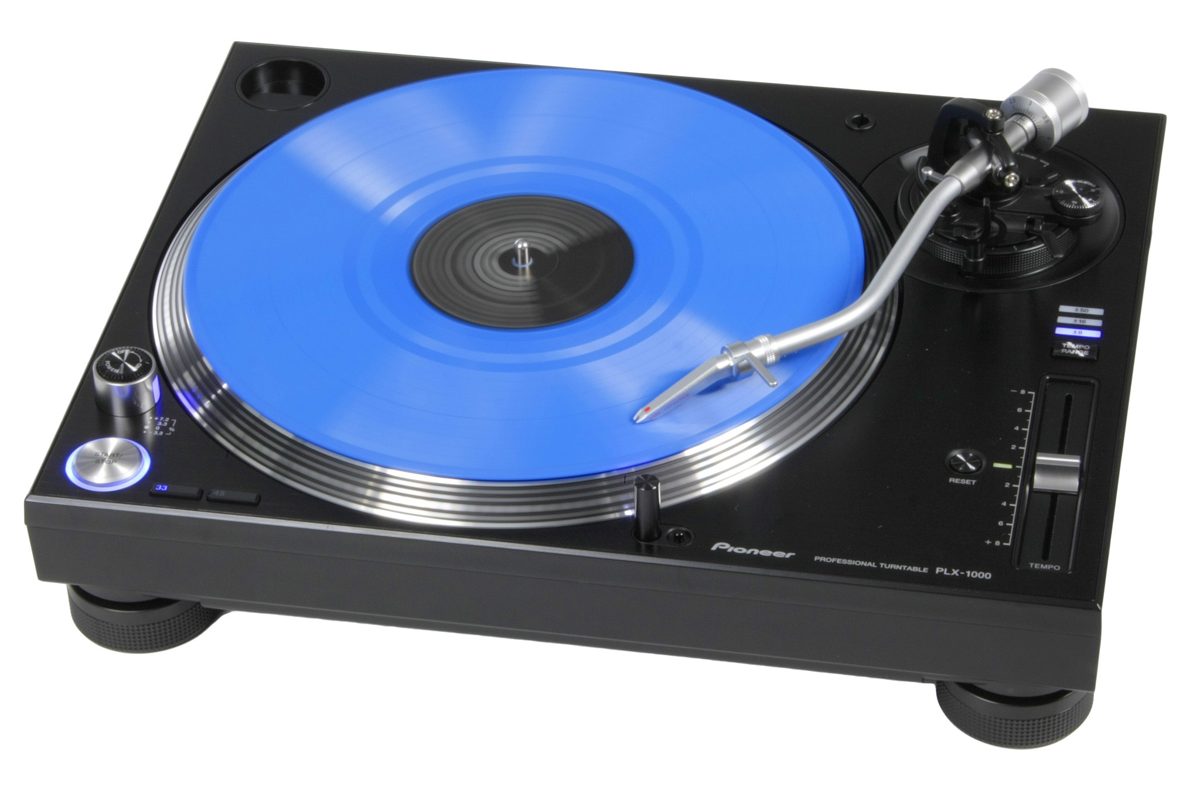
A Pioneer PLX-1000 direct-drive turntable, the deck Pioneer paired with rekordbox DVS timecode vinyl
Photo: Peter VanLane, via Wikimedia Commons (CC BY 2.0) · CC BY 2.0

Pioneer's rekordbox DJ software, launched October 2015, gained timecode-vinyl control with the version 4.1 update, unlocked by Pioneer's own RB-VS1-K control vinyl and DVS-compatible hardware.

Why it matters Brought DVS support to Pioneer's own software ecosystem, years after Final Scratch, Serato and Traktor, completing the roster of major DVS platforms around CDJ/DJM club-standard gear.

  • DJ TechTools 2016-03 Contemporary trade-press report dated 22 March 2016 on the 4.1 update adding DVS; read September 2026.
  • Pioneer DJ 2015-09 Pioneer's own October 2015 rekordbox DJ 4.0 launch announcement, noting DVS control as a planned future enhancement; read September 2026.
On the timeline →
2017

Rane Seventy-Two arrives as a touchscreen battle mixer

Rane · Mukilteo, WA

The Seventy-Two paired traditional scratch-mixer hardware (tension-adjustable faders, dual Flex FX engines) with a 4.3-inch touchscreen and dual USB for switching between DJs mid-set, alongside the companion Twelve motorized battle controller.

Why it matters Shows the battle mixer absorbing digital-DJ software control without losing the scratch DJ's physical vocabulary, the direct lineage from the Bozak and GLi 3800 to today's screens.

  • DJWORX 2026-09 DJ-gear trade coverage of the Seventy-Two's Q4 2017 release and specs; read September 2026.
On the timeline →
2019 April

Phase ships wireless DVS, dropping the timecode record

MWM · Paris, France

MWM's Phase replaces timecode vinyl with a small battery-powered transmitter stuck to an ordinary record (or spun on its own without a turntable) that sends rotation/speed data wirelessly to a receiver feeding Serato, Traktor or rekordbox; no special control vinyl needed.

Why it matters Breaks DVS's dependence on purpose-pressed timecode vinyl for the first time, letting scratch DJs control digital files while cueing whatever record happens to be on the platter.

Sources disagree Phase was announced at NAMM in January 2018 and originally slated to launch later that year; shipping slipped to January 2019 and then again, with trade press confirming pre-ordered units going out by mid-April 2019 after a crowdfunded, repeatedly delayed rollout.

  • DJ TechTools 2018-01 Contemporary NAMM 2018 announcement coverage; read September 2026.
  • MusicRadar 2019-04 Dated 18 April 2019, confirms shipping of pre-ordered units after repeated delays; read September 2026.
On the timeline →
2020 October 15

Pioneer DJ announces the DJM-S11

Pioneer DJ (AlphaTheta) · Tokyo, Japan

A two-channel, four-deck scratch mixer with a customisable touchscreen, dual-pass filters and FX levers, replacing the DJM-S9 as Pioneer's flagship battle/scratch mixer, compatible with both Serato and rekordbox.

Why it matters The current end point of the battle-mixer lineage running from the Bozak through the GLi 3800, Vestax PMC-05 and Rane's TTM/Seventy series, digital-file control fully merged into a scratch-DJ-first hardware design.

  • DJ Mag 2020-10 Contemporary trade-press announcement coverage, dated 15 October 2020; read September 2026.
On the timeline →
2026 October 21

Technics unveils the SL-1210MKX at Amsterdam Dance Event

Technics (Panasonic) · Amsterdam, Netherlands

A new flagship above the SL-1210MK7, launched during ADE's 30th edition in the SL-1200 series' 55th-anniversary year, with a heavier chassis and new isolation feet against club feedback, a dedicated 4 percent pitch range for fine tempo work and a new 50 percent range.

Why it matters Fifty-five years on, the 1200 is still the turntable the booth is built around; the first dedicated narrow pitch range in the series' history shows Technics still tuning it for DJs who beat-match by ear on vinyl.

Sources disagree Price announced as 1,299 pounds and 1,499 euros, on sale January 2027; one Australian report gives a December 2026 local release.

  • Resident Advisor 2026-10 Dated 22 October 2026; confirms the 21 October ADE debut, the 4 and 50 percent pitch ranges, heavier chassis and isolation feet, 1,299 pounds; read November 2026.
  • MusicTech 2026-10 Confirms the Pacific, Amsterdam unveiling at ADE's 30th edition, the dedicated 4 percent range as a first for the SL-1200 series, 1,299 pounds and 1,499 euros, on sale January 2027; read November 2026. Tip from Technics DJ Channel Europe by email, 2 November 2026.
On the timeline → Every SL-1200 model →

How this chapter was researched

The arc runs from radio's earliest record-spinning announcers, through the turntable's own mechanical evolution (idler wheel to belt to Technics direct drive), into the Bronx park-jam techniques that built hip-hop DJing, and on to digital vinyl and today's touchscreen battle mixers. Three "firsts" are genuinely disputed and recorded as such below: (1) who ran the first twin-turntable DJ set: Jimmy Savile's own claim (Guardbridge Hotel, 1947) versus Ron Diggins's better-documented Diggola (Lincolnshire, Sept 1947), muddied further by twin-turntable rigs described in print as early as 1929; (2) who actually invented scratching: Grand Wizzard Theodore's accidental 1975 discovery is the standard account, but Grandmaster Flash's own camp has made competing claims, and Theodore himself has given a nuanced answer crediting Flash with the idea but not the technique; (3) which mixer was really "first" with a horizontal crossfader: Bozak's 1971 CMA-10-2DL, the mid-70s GLi 3800 Kool Herc reportedly used, and the 1977 GLI PMX 7000/Citronic SMP101 are all credited by different serious sources. Left unsettled: the exact year Walter Winchell coined "disc jockey" (sources say 1934, 1935 or 1937, with print citations from 1941), the precise release year of Vestax's PMC-05 TRIX battle mixer, and whether Technics' SP-10 should be dated to 1969 or 1970: Technics' own current site says 1970, older coverage says 1969.

The history desk

Were you there? Help us write the rest.

This timeline is built from dated sources, and it is never finished. If you cut it, pressed it, played it or sold it, we want to hear from you.

  • A date we got wrong, or a first we missed
  • A story from the booth, the plant or behind the counter
  • A photo you took yourself (we credit you by name)
  • A source we should cite: a flyer, an article, a record sleeve

Send a history tip or write to hello@thevinylmap.com

Every addition is checked against a source before it goes up, and credited to you.