History / The record

The record

How did the record get from Edison's tinfoil to outselling the CD again?

27 dated moments 6 disputed firsts Checked September 2026

How this chapter works. Every date comes from a source you can open, listed under each moment. Where the sources disagree about who was first, we say so rather than pick a winner. Editorial notes from the editor, a DJ of thirty years, are marked as the editor's. See this chapter on the timeline →

Acoustic to electric 1877 to 1948

1877 December

Edison builds the tinfoil phonograph
Thomas Edison; machinist John Kruesi · Menlo Park, New Jersey

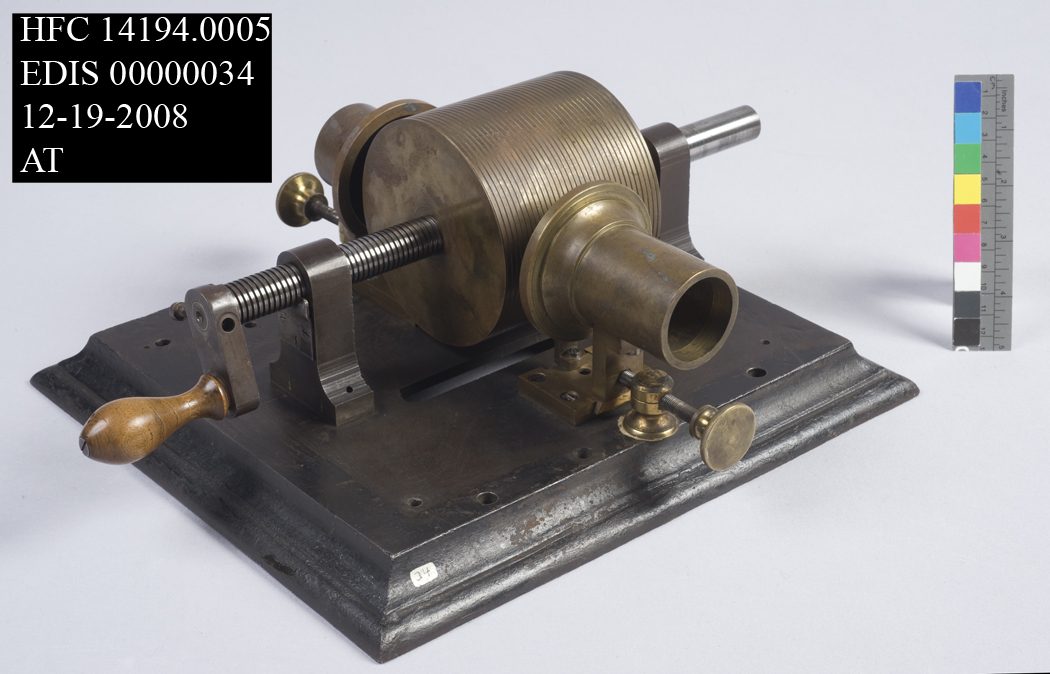
Edison's 1877 tinfoil cylinder phonograph (the actual artifact), photographed for the National Park Service's NPGallery
Photo: National Park Service (NPGallery), via Wikimedia Commons (public domain) · Public domain

Edison has Kruesi build a hand-cranked cylinder machine wrapping tinfoil around a grooved drum. On Dec 6 he records himself reciting 'Mary had a little lamb' and plays it back successfully. Patent filed Dec 24, 1877; granted Feb 19, 1878.

Why it matters First device to both record and reproduce sound. Every later disc and cylinder format is a direct descendant of this mechanism.

Sources disagree Aug 12, 1877 is the popularly cited 'invention' date (repeated by many outlets), but Edison aide Charles Batchelor's diary shows the machine wasn't constructed until the first week of December, with the first successful playback on Dec 6.

  • Library of Congress 2026-09 Read Sept 2026. Confirms Dec 24 1877 patent filing, Feb 19 1878 grant, and the Batchelor-diary dispute over the true construction date.
  • American Society of Mechanical Engineers 2026-09 ASME Engineering History Landmark page corroborating the Dec 6 1877 first playback and the 'Mary had a little lamb' account attributed to Edison himself.
On the timeline →
1887 November 8

Berliner patents the flat-disc gramophone

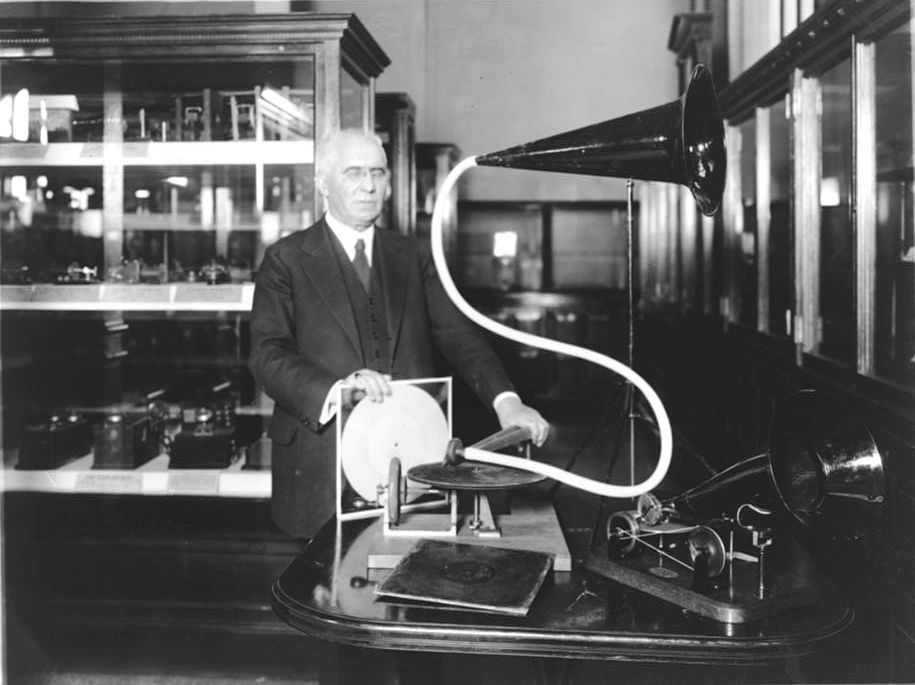
Emile Berliner · Washington, DC

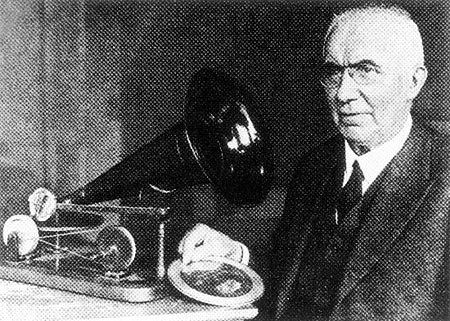
Emile Berliner alongside his 1887 flat-disc gramophone
Photographer unknown (photographer died over 70 years ago), via Wikimedia Commons (public domain) · Public domain

US Patent 372,786 'Gramophone' granted to Berliner (filed May 4, 1887). Describes a laterally-cut groove on a flat disc read by a fixed stylus, plus a photoengraving/electroplating process to mass-duplicate discs from a single master, unlike Edison's one-of-a-kind, vertically-cut cylinders.

Why it matters The flat disc and its mass-duplication process is the direct ancestor of every vinyl record pressed since; it is what made a record industry (as opposed to individual recordings) possible.

Sources disagree Edison's cylinder phonograph (1877) recorded sound a decade earlier, but each cylinder was a unique recording that couldn't be cheaply duplicated. Sources differ on whether Edison or Berliner should be credited as inventing 'the record'; the disc format is what survived, but Edison's device came first.

On the timeline →
1888 May 16

Berliner's first public demonstration of the gramophone

Emile Berliner · Philadelphia, Pennsylvania

Emile Berliner with the model of the gramophone he invented and first demonstrated in Philadelphia
Photo: National Photo Company Collection, Library of Congress, via Wikimedia Commons (public domain) · Public domain

Berliner gives the first public lecture and demonstration of the gramophone at the Franklin Institute, playing copper-duplicated discs of voice and instruments for the audience. Published the next year as 'The Gramophone: Etching the Human Voice.'

Why it matters First time the public saw a flat disc played back and grasped that, unlike a cylinder, it could be duplicated in quantity from one master, the moment the gramophone became a plausible commercial format.

On the timeline →
1894

US Gramophone Company starts selling discs commercially

Emile Berliner · Washington, DC

After an 1889 false start (the American Gramophone Company in New York collapsed before selling a single unit), Berliner's United States Gramophone Company begins manufacturing gramophones and selling 7-inch hard-rubber discs to the public from Washington, DC.

Why it matters The first commercially available flat discs, years before 10-inch shellac records became the norm, and the seed of what becomes Victor.

On the timeline →
1898

The Gramophone Company founded in London

William Barry Owen; Trevor Williams; licensing Emile Berliner's patents · London, England

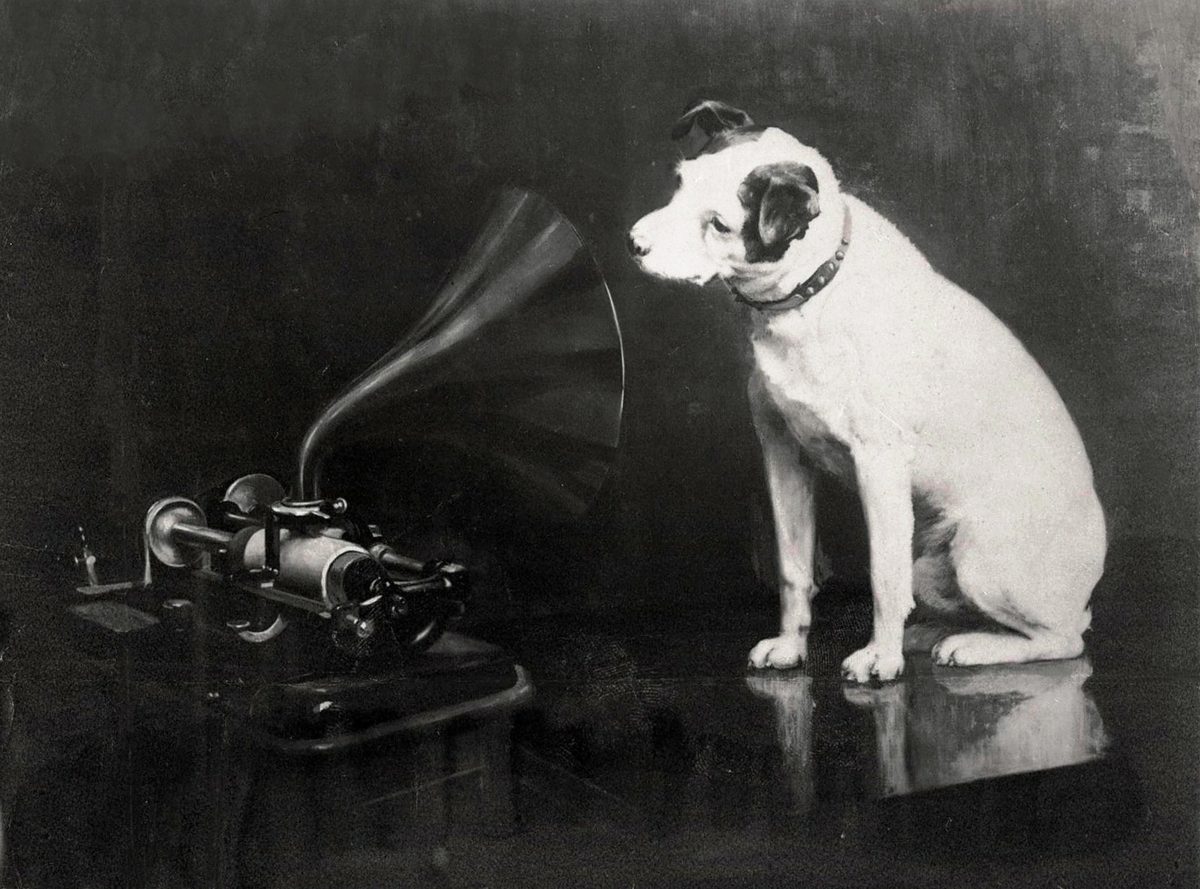
Francis Barraud's 1898 painting "His Master's Voice" (Nipper the dog listening to a gramophone), the image the Gramophone Company adopted as its trademark that year
Painting: Francis Barraud, 1898, via Wikimedia Commons (public domain) · Public domain

Owen arrives from the US in July 1897 to exploit Berliner's British patents; he and Trevor Williams incorporate The Gramophone Company in 1898 and open a recording studio at Maiden Lane, London, that August.

Why it matters The UK arm of Berliner's disc business; it later became His Master's Voice (HMV) and, eventually, EMI.

On the timeline →
1898 June

Deutsche Grammophon founded in Hanover

Emile Berliner; his brother Joseph Berliner · Hanover, Germany

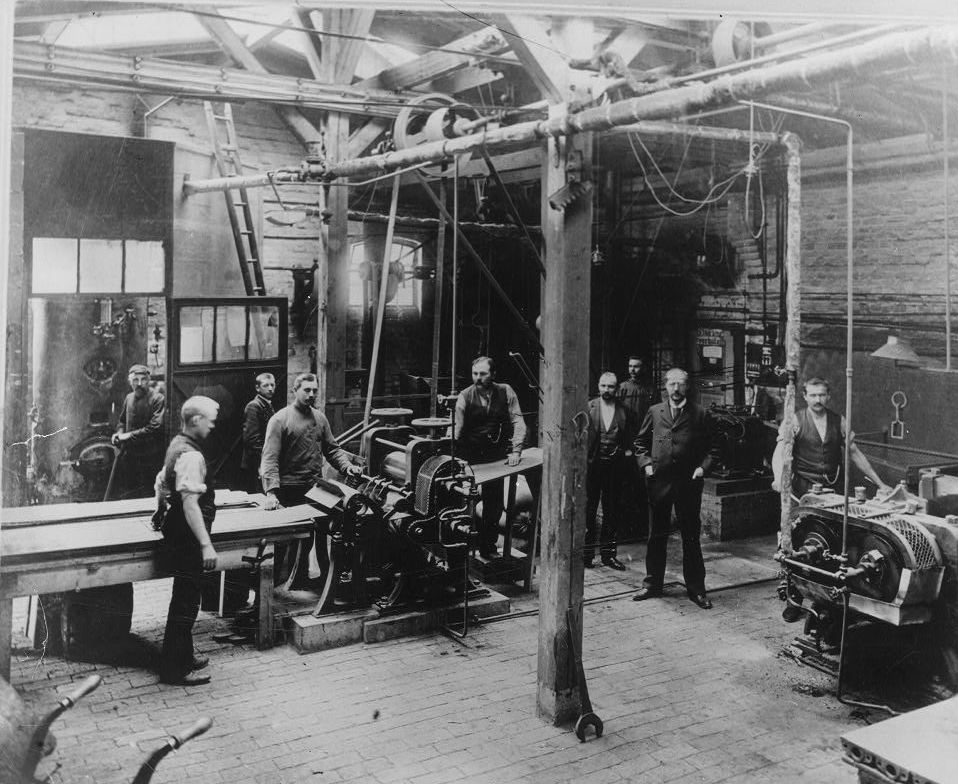
Workers posing around the conveyor belt inside Berliner's gramophone plant in Hanover, Germany
Photo: Reinhold Lessmann, Library of Congress, via Wikimedia Commons (public domain) · Public domain

Berliner founds the German branch of his gramophone business in his birth city, with American-made hydraulic presses producing shellac discs for the new London company. Becomes a joint-stock company headquartered in Berlin in 1900.

Why it matters Completes the three-country Berliner gramophone network (US/UK/Germany) that seeded the modern record industry; Deutsche Grammophon is the world's oldest surviving record company.

On the timeline →
1901

Victor Talking Machine Company formed

Eldridge R. Johnson; Emile Berliner · Camden, New Jersey

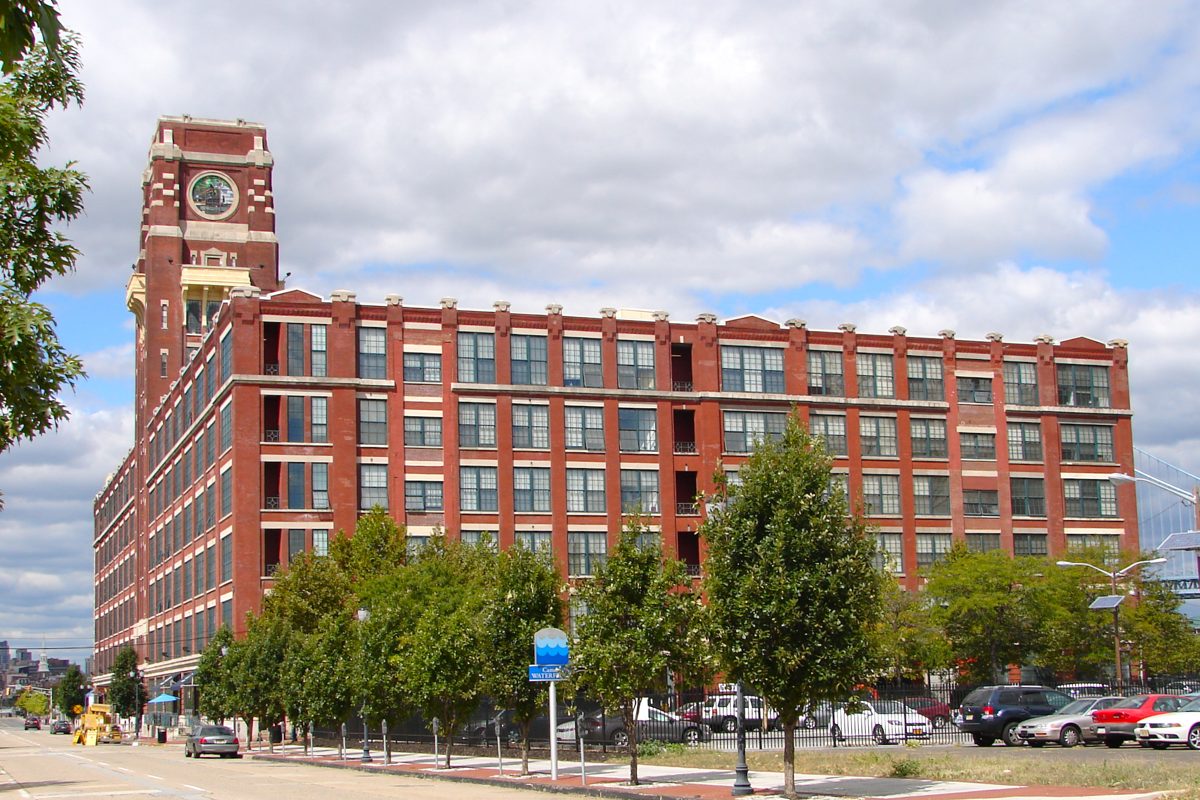
The Nipper Building (Building 17), the RCA Victor Talking Machine Company's Camden, New Jersey plant, topped with the giant Nipper statue
Photo: Smallbones, via Wikimedia Commons (public domain, own work) · Public domain

After patent disputes forced a 1900 court injunction shutting down the Berliner Gramophone Company of Philadelphia, Berliner pooled his patents with machinist Eldridge Johnson's spring motor and pressing business to found Victor. Johnson became president; Berliner moved on to other projects.

Why it matters Victor (later RCA Victor) becomes the dominant US record and phonograph maker for the next half-century, and the eventual source of the 45 rpm single.

On the timeline →
1925

Electrical recording replaces the acoustic horn

Joseph P. Maxfield and Henry C. Harrison (Western Electric/Bell Labs); adopted by Columbia and Victor · New York / Camden, New Jersey

A Western Electric double-button carbon microphone from the 1920s, the class of electrical microphone that replaced the acoustic recording horn
Photo: Daderot, cropped by Chetvorno, via Wikimedia Commons (public domain) · Public domain

Western Electric's condenser-mic-and-amplifier recording system is licensed to Columbia and Victor. Victor's first electrical session is Feb 9 1925; Columbia is all-electric by Apr 29. Frequency range jumps from ~250-2,500 Hz (acoustic horn) to 60-6,000 Hz.

Why it matters The first fundamental change to how records were made since the phonograph itself; it's why pre-1925 and post-1925 78s sound so different, and it's the direct ancestor of the studio recording chain used ever since.

On the timeline →
1942

Wartime shellac shortage pushes records toward vinyl

US War Production Board · United States

With shellac needed for flares and shell coatings, and Southeast Asian supply cut off, the WPB orders a 70% cut in record production; labels switch limited runs to vinyl/PVC compounds (branded Vinylite, Metrolite), used before the war only for special pressings.

Why it matters The war-driven shift is what first proved vinyl's superior durability and sound at scale, setting up its postwar takeover of shellac.

  • RIAA 2026-09 Background context only, not the primary source for this event (see note below); RIAA's own historical materials reference the shellac-to-vinyl wartime transition in passing. Primary claim sourced instead to the trade-press summary below.
  • Gray's Auctioneers (fine-art/collectibles auction house blog) 2019-01 Read via search Sept 2026. Names the War Production Board order and the wartime vinyl-compound brand names; could not independently verify the exact 70% figure against a National Archives WPB record in the time available.
On the timeline →

Microgroove 1948 to 1972

1948 June 21

Columbia introduces the 33⅓ rpm LP

Columbia Records (Peter Goldmark's team: William S. Bachman, Howard H. Scott; unveiled by label president Goddard Lieberson) · Waldorf-Astoria Hotel, New York City

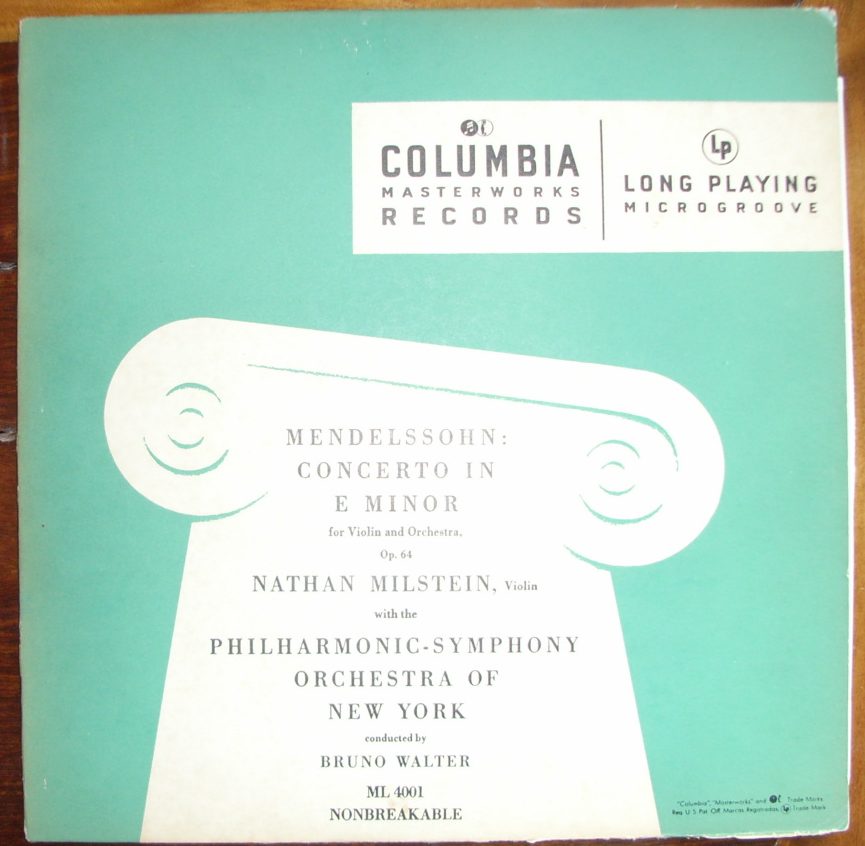
Columbia ML4001, the Mendelssohn Violin Concerto with Bruno Walter, one of Columbia's first 33⅓ rpm LP releases in 1948
Photo: Sigmundg, via Wikimedia Commons (CC BY-SA 4.0) · CC BY-SA 4.0

Columbia unveils the 12-inch, 33⅓ rpm 'long-playing' microgroove record at a press conference. First release: ML 4001, Nathan Milstein playing Mendelssohn's Violin Concerto with Bruno Walter conducting. Narrower grooves give ~22 minutes per side, versus 4-5 minutes on a 78.

Why it matters The LP is what turned the album from a bulky multi-disc set into a single continuous listening format, the dominant format for full-length music for the next 35+ years.

Sources disagree Goldmark is popularly credited as the LP's inventor and chief promoter, but colleague Edward Wallerstein later said Goldmark 'didn't actually do any of the work'; the detailed engineering was largely done by Bachman and Scott under Goldmark's direction.

  • Gizmodo 2026-09 Read Sept 2026. Confirms June 21 1948 date, Waldorf-Astoria unveiling by Goddard Lieberson, and ML 4001 as the first release.
  • Engineering and Technology History Wiki (IEEE) 2026-09 Corroborates Goldmark's role and the Bachman/Wallerstein dispute over credit.
On the timeline →
1949 March 31

RCA Victor launches the 45 rpm single

RCA Victor engineers · United States

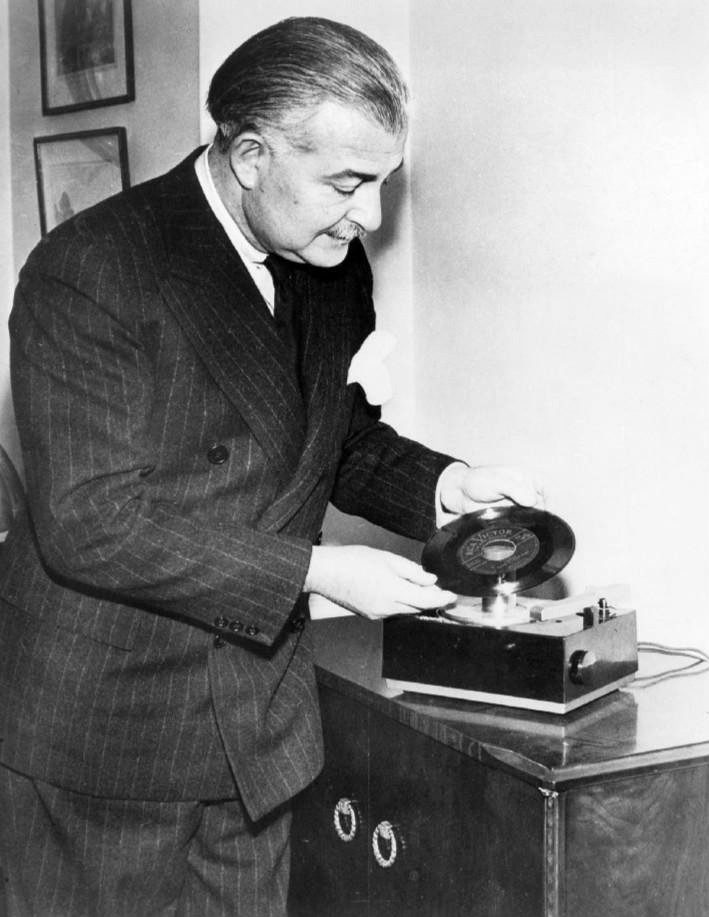
Arthur Fiedler demonstrating the new RCA 45 rpm record player and a 45 rpm record, Feb 1949
Photo: NBC Radio/NBC photo, 1949, via Wikimedia Commons (public domain) · Public domain

RCA releases the 7-inch, 45 rpm single as a cheaper, more durable, higher-fidelity replacement for the 78. The first release is Eddy Arnold's 'Texarkana Baby' b/w 'Bouquet of Roses.' RCA's engineers determined 45 rpm was the most efficient speed for microgroove discs playing up to about 5 minutes.

Why it matters Sets up the format split that lasted decades: 12-inch LP for albums, 7-inch 45 for singles, and the 45's wide center hole becomes the physical signature of the jukebox single.

On the timeline →
1950

The 'war of the speeds'

Columbia (33⅓ LP) vs. RCA Victor (45 rpm) · United States

With Columbia's LP and RCA's 45 both launched within a year of each other, both aimed at replacing the 78, retailers and consumers are caught between three incompatible speeds and record-changer designs; sales dip as buyers wait. Trade press dubs 1949-51 the 'war of the speeds.'

Why it matters The dispute is only resolved by a de facto split (LP for albums, 45 for singles, both eventually outselling 78s) that defines the format landscape into the CD era.

  • A Journal of Musical Things 2026-09 Read via search Sept 2026. Music-industry history blog summarizing the 1949-51 speed-war period and its resolution.
On the timeline →
1958 March

Stereo LPs reach general release

Audio Fidelity Records (Sidney Frey, founder) · United States

Label and sleeve of one of the first mass-produced stereo records, Audio Fidelity's stereo demonstration LP
Photo: Audio Fidelity / via Free-Jazz.net, via Wikimedia Commons (public domain; published in the US 1931-1963, copyright not renewed) · Public domain

Small independent label Audio Fidelity presses the first mass-produced stereophonic demonstration disc (Dukes of Dixieland / sound effects) in Dec 1957, using Westrex disc-cutting technology; only 500 copies are made. The first four stereo titles available to the general public follow in March 1958.

Why it matters Stereo LPs move sound reproduction from a single channel to two, matching the two-speaker home setups that become standard for the rest of the LP era.

Sources disagree Sources differ on whether 'the first stereo LP' is Audio Fidelity's December 1957 demonstration disc (500 copies, industry-only distribution) or its March 1958 general-release titles; the demo disc predates general availability by about three months.

On the timeline →
1963

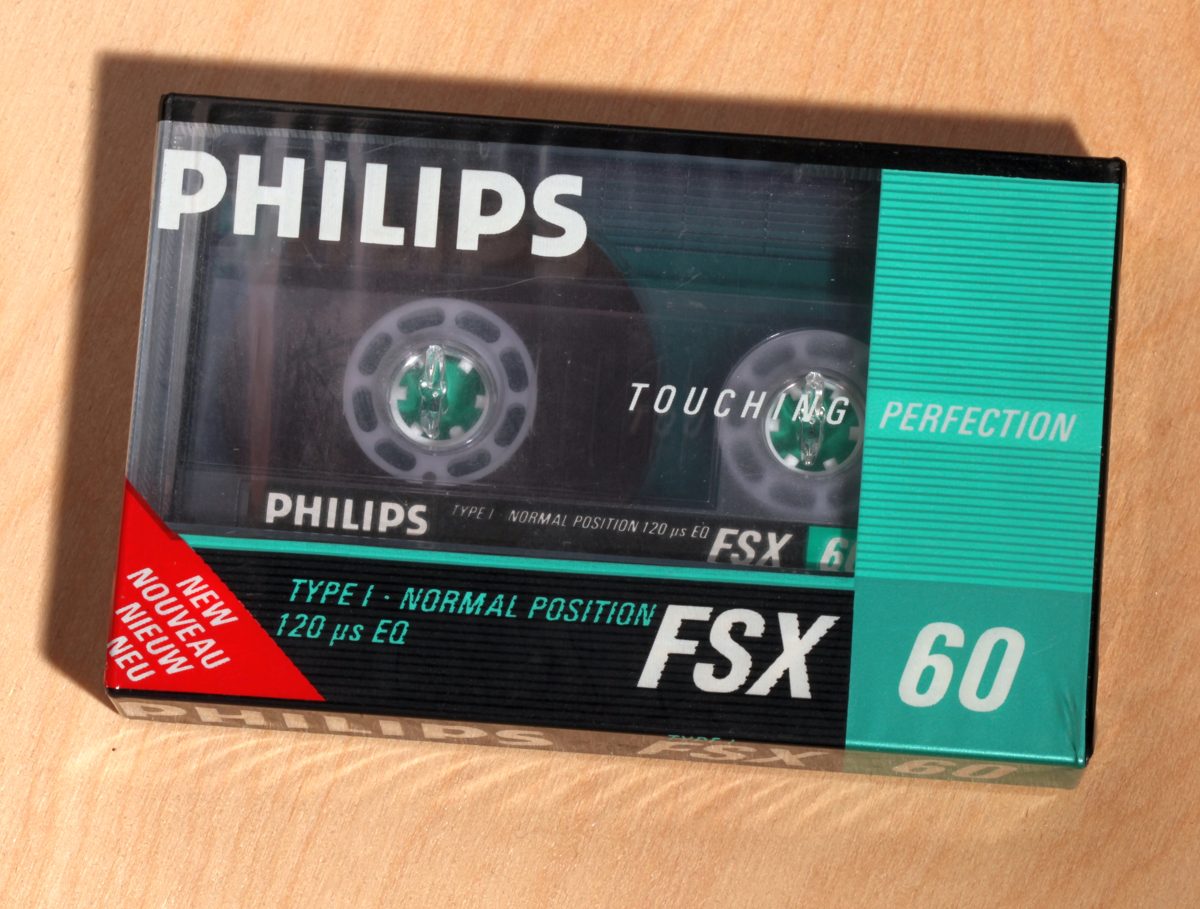
Philips introduces the Compact Cassette

Lou Ottens and team, Philips · Berlin, Germany (IFA Radio Show)

A Philips-branded compact cassette tape
Photo: Joost J. Bakker IJmuiden, via Wikimedia Commons (CC BY 2.0) · CC BY 2.0

Philips debuts the Compact Cassette, a small plastic-encased reel-to-reel tape designed by Ottens's team to be pocket-sized and easy to use. Philips licenses the format free of royalty from 1966, letting it become a worldwide standard; over 100 billion cassettes are eventually sold.

Why it matters The cassette is the first format that let ordinary listeners record and re-record cheaply and portably, competing with vinyl for decades and, later, feeding the mixtape and DJ dubbing culture.

“We knew it could become big, but could have never imagined it would be a revolution.” (Olga Coolen, Director of the Philips Museum, Philips.com, March 2021)
  • Philips (official company news archive) 2021-03 Read Sept 2026. Philips's own retrospective on Ottens (who died March 2021), confirming the 1963 Berlin debut and the maker's-own account of the format's design and licensing.
On the timeline →

Two turntables 1972 to 1988

1982 April 7

Direct Metal Mastering (DMM) patented as a lacquer alternative

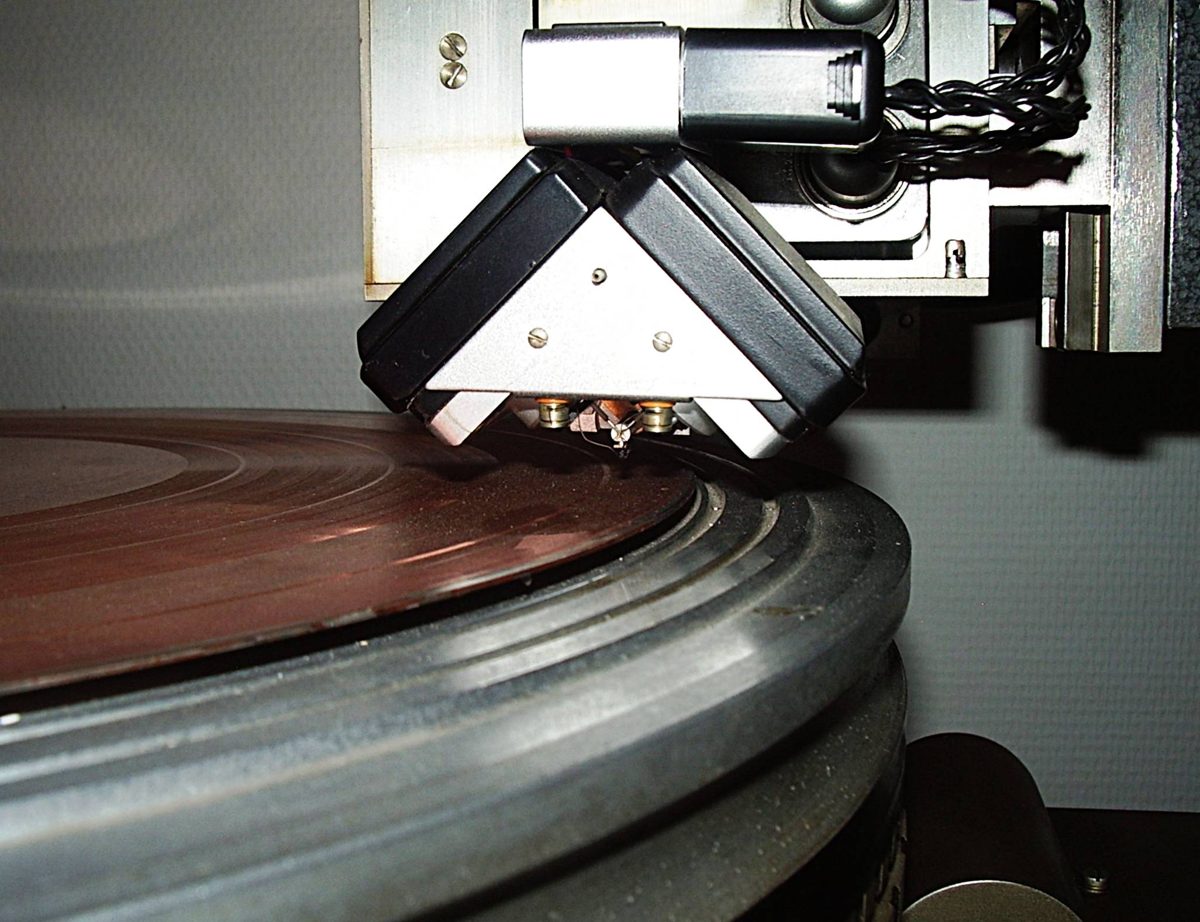
TELDEC (Telefunken-Decca-Schallplatten GmbH) with Georg Neumann GmbH · Hamburg, Germany

The Neumann cutting head for TELDEC's Direct Metal Mastering process, used to cut copper masters instead of lacquer
Photo: 32bitmaschine, via Wikimedia Commons (CC BY-SA 3.0) · CC BY-SA 3.0

TELDEC and Neumann file US Patent 4,484,320 for cutting master grooves directly into a copper-coated disc with an electrodynamically driven stylus and ultrasonic carrier, instead of the traditional soft lacquer-coated aluminum blank. Patent granted Nov 20, 1984.

Why it matters DMM is the one mainstream alternative to lacquer disc-cutting ever put into commercial use, relevant again decades later when lacquer supply itself became a bottleneck for the industry.

On the timeline →
1982 August 17

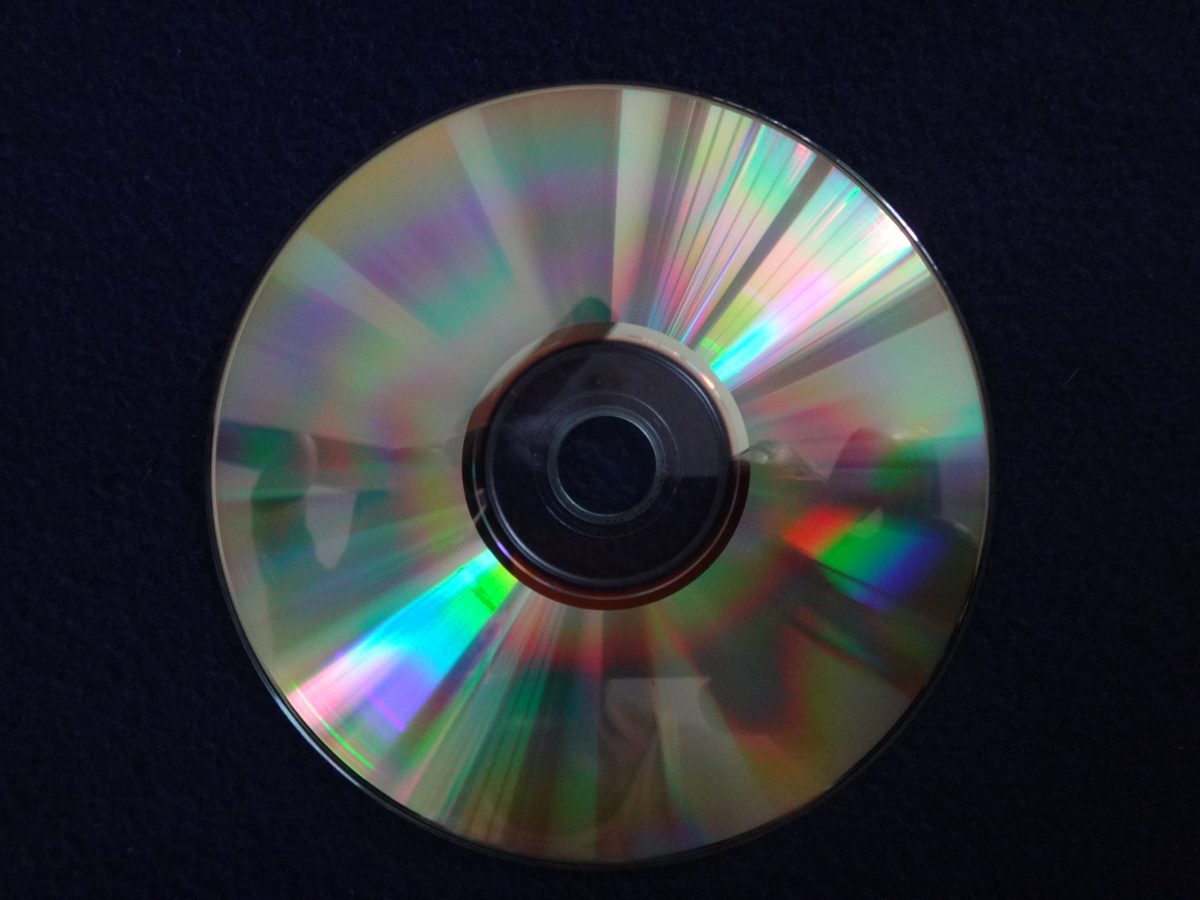
The first compact disc is manufactured

Philips (manufacturing plant); Sony/Philips (joint Red Book CD-DA standard, published 1980) · Langenhagen, Germany

A compact disc (representative object photo, not the specific 1982 pressing)
Photo: gausanchennai, via Wikimedia Commons (CC BY-SA 4.0) · CC BY-SA 4.0

Philips presses the first commercial CD at its Langenhagen factory: ABBA's 'The Visitors.' Sony/Philips had partnered on the format since 1979, publishing the Red Book standard in 1980. It launches in Japan Oct 1982 (Sony's CDP-101 player, Billy Joel's '52nd Street') and Europe/US in 1983.

Why it matters The CD is the format that ends shellac-era analog manufacturing entirely and, within six years, overtakes vinyl LP sales, the direct cause of vinyl's near-disappearance in the late 1980s and 1990s.

On the timeline →

The CD years 1988 to 2007

1988

CD sales overtake vinyl LP in the US

United States

Industry shipment data shows the CD passing the vinyl LP in 1988, faster than most in the industry expected (a 1988 Billboard story had predicted CDs wouldn't overtake vinyl until the mid-1990s). CDs go on to pass the cassette as the leading US format the following year, 1989.

Why it matters Marks the start of vinyl's near-total commercial collapse: by the early 1990s, most US pressing plants had closed or converted to CD production, and new vinyl releases became rare until the 2007-onward revival.

Sources disagree I could not verify precise US vinyl-shipment unit figures for 1988-89 against a source I was able to open directly (RIAA's historical sales database is JavaScript-rendered and a 1989 Washington Post archive piece was paywalled); the qualitative sequence (CD passes vinyl in 1988, passes cassette in 1989) is corroborated by multiple outlets but the exact tonnage is omitted here rather than guessed.

  • CBC Archives 2026-09 Read via search Sept 2026. Canadian public broadcaster's archival retrospective on the CD's displacement of vinyl in the late 1980s.
On the timeline →

The revival 2007 to 2026

2007

US vinyl sales begin their turnaround

United States

After bottoming out in the 1990s and staying flat through the mid-2000s, Nielsen SoundScan-tracked US vinyl sales grow ~15% in 2007 to nearly a million units, driven by new releases from acts like Elvis Costello and rising turntable sales. Billboard runs a Nov 2007 cover story on it.

Why it matters The first measurable year of what becomes the 'vinyl revival', an unbroken streak of US year-over-year vinyl revenue growth that, per RIAA, reaches 19 consecutive years by 2025.

On the timeline →
2008 April 19

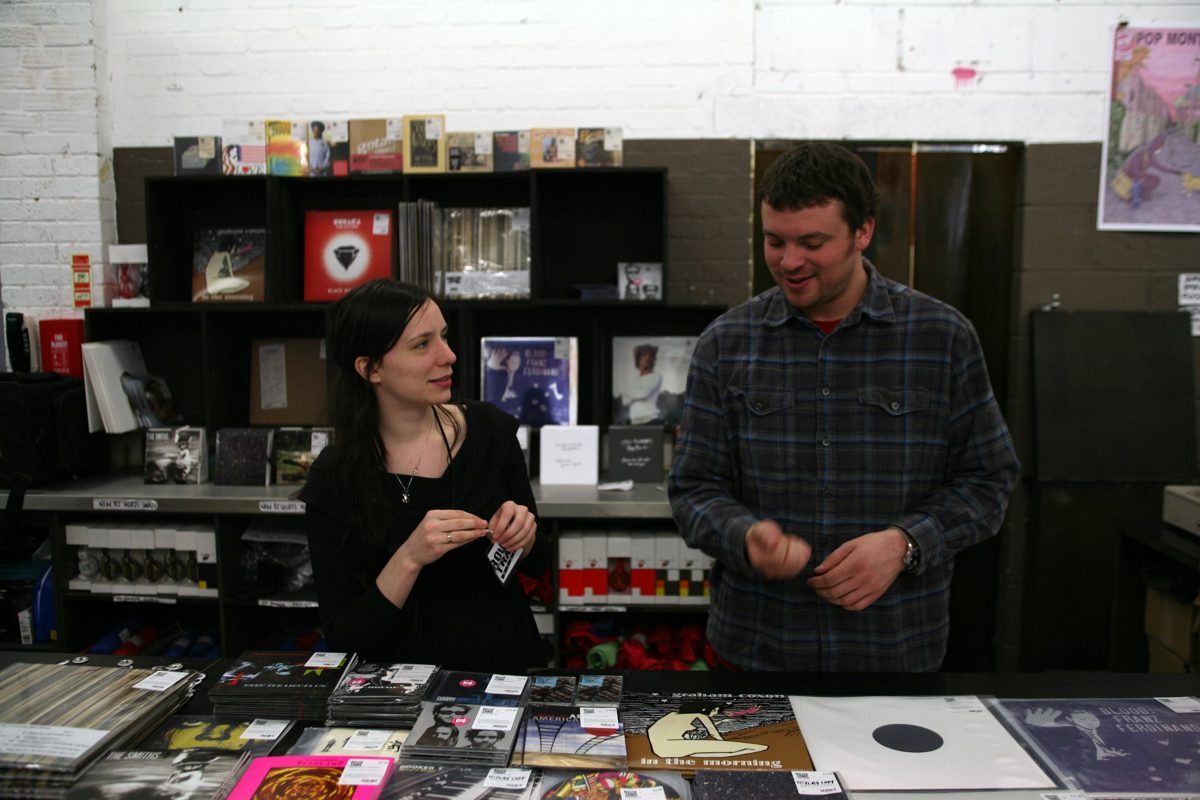
The first Record Store Day

Eric Levin, Michael Kurtz, Carrie Colliton, Amy Dorfman, Brian Poehner, Don Van Cleave · United States (nationwide; flagship event at Rasputin Music, Berkeley, CA)

Record Store Day at Rough Trade East, London, April 2009 (RSD's second year), representative of the annual event founded in 2008; no free image of the 2008 Rasputin Music, Berkeley flagship was found
Photo: Tom Mcshane, via Wikimedia Commons (CC BY 2.0) · CC BY 2.0

Conceived in 2007 by independent record store owners (inspired by Free Comic Book Day) to celebrate the roughly 1,400 independent US record stores. The first RSD is April 19, 2008, with exclusive releases from 10 acts incl. Metallica and R.E.M.; Metallica plays in-store at Rasputin Music, Berkeley.

Why it matters RSD becomes the single biggest annual demand spike for new vinyl pressing, a major driver of the exclusive-release culture and, later, of the pressing-plant capacity crunch.

  • Grunge.com (history feature) 2026-09 Read via search Sept 2026. Names the six founders, the Free Comic Book Day inspiration, and the April 19 2008 first-event date and lineup.
On the timeline →
2020 February 6

Apollo Masters lacquer plant fire

Apollo Masters Corporation · Banning, California

A fire destroys the Apollo Masters/Transco facility, which supplied an estimated 70-85% of the world's blank lacquer discs, the master material vinyl is cut into before electroplating and pressing. No one is hurt; the cause was never determined. MDC in Japan becomes the only lacquer maker left.

Why it matters A single-building fire threatens to halt new vinyl mastering globally overnight, exposing how fragile the revival's supply chain had become, a direct cause of the pressing backlog that follows in 2020-22.

“This fire will present a problem for the vinyl industry worldwide.” (Ben Blackwell, Third Man Records co-founder, quoted by Rolling Stone, February 2020)
  • Rolling Stone 2020-02 Read via search Sept 2026 (direct fetch was paywall-redirected). Confirms Feb 6 2020 fire date, no injuries, undetermined cause, and MDC (Japan) as the sole remaining lacquer supplier.
  • Wikipedia 2026-09 Used only to identify underlying reporting, not cited as the source of fact; cross-checked against the Rolling Stone piece above.
On the timeline →
2020 December

US vinyl revenue overtakes CD revenue for the first time since 1986

RIAA · United States

RIAA's year-end 2020 report: US vinyl revenue grows 28.7% to $626 million, while CD revenue falls 23% to $483 million, the first year vinyl has out-earned CDs since 1986. Total physical revenue is roughly flat at $1.1 billion; vinyl is still only 5.2% of total US recorded-music revenue.

Why it matters The clearest single data point that the 'vinyl revival' had become bigger than a nostalgia niche, vinyl beating the format that had made it nearly extinct 30 years earlier.

“For the first time since 1986, revenues from vinyl records were larger than from CDs.” (RIAA, Year-End 2020 Revenue Statistics report)
  • RIAA 2021-02 Read directly (PDF text extracted) Sept 2026. Primary trade-body report; exact figures quoted above are taken verbatim from the report text.
On the timeline →
2021

Vinyl tops $1 billion and the pressing backlog peaks

RIAA; independent and major pressing plants · United States

RIAA's year-end 2021 report: US vinyl revenue grows 61% to just over $1 billion (39.7 million units, +67%), the best year for vinyl since 1986 and a 15th consecutive year of growth. Simultaneously, pressing lead times stretch to 9-12 months industry-wide as demand outstrips plant capacity.

Why it matters Vinyl crosses the symbolic $1 billion US revenue line for the first time in 35 years, but the same growth exposes how few working pressing plants remained after the format's near-death in the 1990s.

  • Variety 2022-03 Read via search Sept 2026, reporting on the RIAA year-end 2021 report figures (61% growth, 39.7M units, 15th consecutive year).
  • Grammy.com (Recording Academy) 2026-09 Read via search Sept 2026. Covers the 9-12 month pressing lead times and the supply/demand mismatch behind the 2021-22 backlog.
On the timeline →
2022

New US pressing plants come online to meet demand

Nashville Record Pressing, Third Man Pressing (Detroit), Cascade Record Pressing (Milwaukee), Second Line Vinyl (Oakland), New Orleans Record Press, Smashed Plastic (Chicago), Brooklyn Vinyl Works, and others · United States (Tennessee, Michigan, Wisconsin, California, Louisiana, Illinois, New York, Colorado)

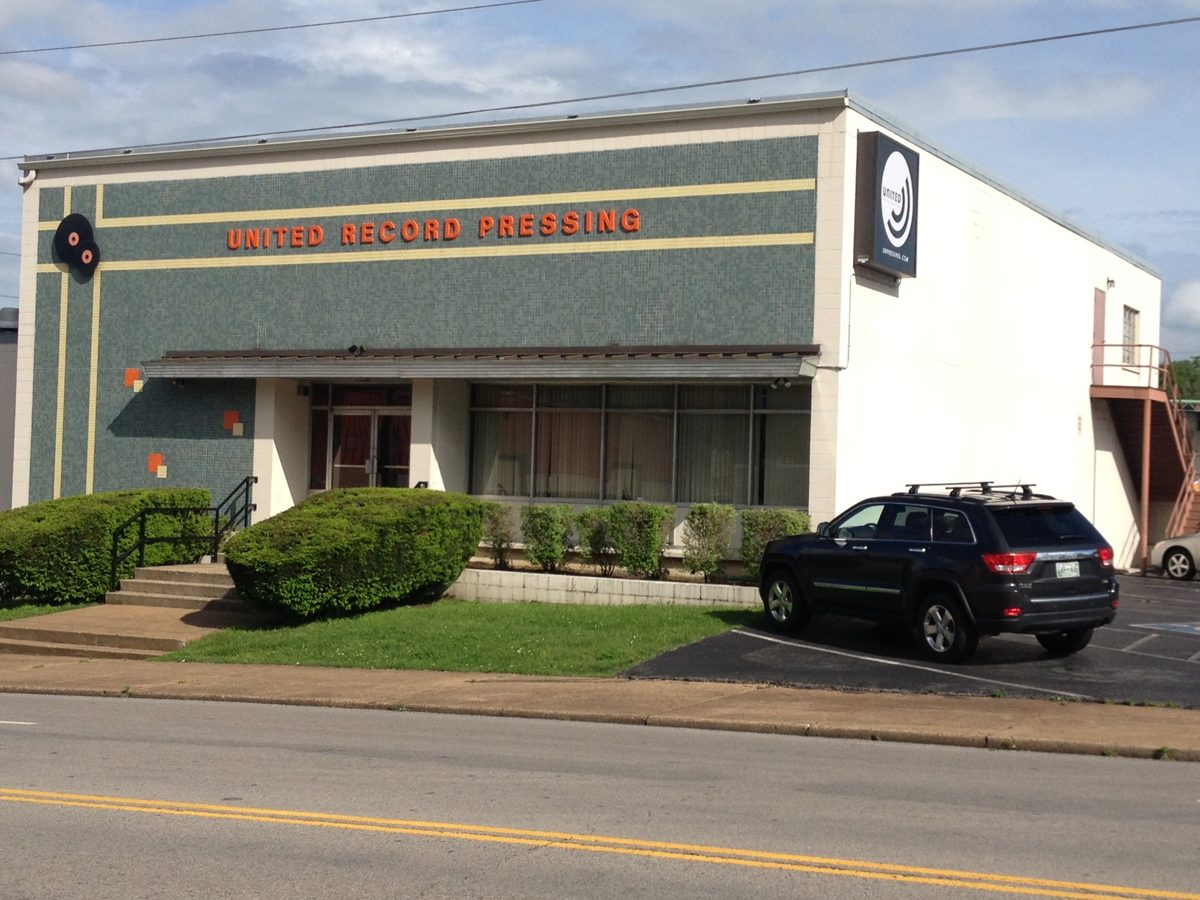
The United Record Pressing building in Nashville, Tennessee, a US vinyl pressing plant, representative of US pressing capacity
Photo: Brooksdawson, via Wikimedia Commons (CC BY-SA 3.0) · CC BY-SA 3.0

Responding to the 2020-21 backlog, more than a dozen new US pressing plants open in the years after 2015, with several coming online in 2021-22; United Record Pressing in Nashville undertakes an expansion adding 48 presses to more than double output toward 100,000+ units/day.

Why it matters The clearest physical evidence that the vinyl revival had become durable enough to justify new manufacturing capacity, not just reactivated old machinery.

On the timeline →
2022

US vinyl units outsell CDs for the first time since 1987

RIAA · United States

RIAA's year-end 2022 report: US consumers buy 41 million vinyl LP/EP units vs. 33 million CDs, the first year vinyl has outsold CDs in units since 1987. Vinyl revenue grows 17% to $1.2 billion (71% of physical revenue, a 16th consecutive year of growth); CD revenue falls 18% to $483 million.

Why it matters A second, distinct milestone from 2020's revenue crossover; this time vinyl beats CDs on raw unit count, the harder-to-reach threshold given CDs' lower price point.

“For the first time since 1987, vinyl albums outsold CDs in units (41 million vs 33 million).” (RIAA, Year-End 2022 Revenue Statistics report)
  • RIAA 2023-03 Read directly (PDF text extracted) Sept 2026. Primary trade-body report; figures quoted verbatim from the report text and its statistics table.
On the timeline →
2022

UK vinyl revenue overtakes CD revenue for the first time since 1987

BPI / ERA · United Kingdom

UK vinyl trade revenue reaches £119.5 million (+3.1%) against £89.5 million for CDs, the first year vinyl has out-earned CDs in the UK since 1987, and a 15th consecutive year of vinyl revenue growth. CDs still outsell vinyl in raw units that year (11.6 million CDs vs. 5.5 million vinyl LPs).

Why it matters The UK equivalent of the US 2020 revenue crossover, on a similar three-decade timescale, though, unlike the US in 2022, CDs still outsold vinyl in units, only losing on revenue.

On the timeline →
2025

US vinyl revenue tops $1 billion for a 19th straight year of growth

RIAA · United States

RIAA's year-end 2025 report (now wholesale-value basis, changed from prior retail-value reporting): US vinyl revenue grows 9.3% to $1.04B on 46.8M units (up from $954.4M/43.4M in 2024), a 19th straight growth year, ~50% of global vinyl revenue. Total US revenue hits $11.5B.

Why it matters The most recent year-end confirmation that vinyl's revival, 19 years in, is still growing rather than plateauing, and that the US alone accounts for roughly half of the world's vinyl spending.

Sources disagree RIAA switched its headline reporting basis from estimated retail value to wholesale value starting with this report, which is why some outlets describe 2025 as vinyl's first $1B year 'since 1983' while the 2021 report (retail basis) described that year's ~$1B as the best 'since 1986'; the two $1B claims are not on the same accounting basis.

  • RIAA 2026-03 Read directly (PDF text extracted) Sept 2026. Primary trade-body report; 2024/2025 vinyl unit and dollar figures quoted verbatim from the report's statistics table, including the wholesale-basis methodology note.
  • The Hollywood Reporter 2026-03 Read via search Sept 2026. Frames the $1B figure as 'first time since 1983' under the new wholesale methodology, which prompted the dispute note above.
On the timeline →
2025

UK vinyl revenue hits a three-decade high

BPI · United Kingdom

BPI's year-end 2025 report: UK vinyl trade revenue climbs 19.9% to £174.7M (7.6M units, +13.3%), a 16th straight growth year, vinyl's highest UK revenue in 30+ years, now 62.9% of UK physical revenue. Taylor Swift's 'The Life of a Showgirl' sells 147,000+ copies, most of any new album this century.

Why it matters The most recent UK year-end confirmation that the vinyl revival, like in the US, shows no sign of slowing, and that it is now driven mostly by new releases, not just reissues and back catalogue.

On the timeline →

How this chapter was researched

The arc runs invention (Edison's cylinder, 1877) to format war (Edison vs. Berliner's flat disc) to industry (Victor/Gramophone Co./Deutsche Grammophon, shellac 78s), through two postwar speed wars (33⅓ vs. 45), a near-death by CD in 1988-89, and a 2007-onward revival that, by the mid-2020s, has vinyl outselling CDs in both US units and UK revenue. Three disputes are genuinely unsettled in the sources: (1) Edison's "invention date": popularly Aug 12 1877, but his aide's diary shows the machine wasn't built until Dec 4-6; (2) whether Edison's un-replicable cylinder or Berliner's mass-producible flat disc is the true ancestor of "the record"; (3) the first stereo LP: Audio Fidelity's Dec 1957 demo disc (500 copies) vs. its March 1958 general-release titles. I could not pin the precise mechanism/date of "78 rpm" becoming a hard industry standard to a single serious source beyond a repeated claim (Gramophone Co.'s 1912 informal average, formalized ~1925 by the synchronous motor's 3,600rpm/46:1 gearing) that traces back to unsourced Wikipedia text: flagged, not asserted as fact. I also could not verify exact 1988-89 US vinyl unit-shipment figures against a source I could open directly (RIAA's own historical database is JS-rendered and the Washington Post archive piece is paywalled); the qualitative "CD passed vinyl in 1988, passed cassette in 1989" is well corroborated, the specific tonnage numbers are not included here.

The history desk

Were you there? Help us write the rest.

This timeline is built from dated sources, and it is never finished. If you cut it, pressed it, played it or sold it, we want to hear from you.

  • A date we got wrong, or a first we missed
  • A story from the booth, the plant or behind the counter
  • A photo you took yourself (we credit you by name)
  • A source we should cite: a flyer, an article, a record sleeve

Send a history tip or write to hello@thevinylmap.com

Every addition is checked against a source before it goes up, and credited to you.